Turkish Angora Cat: Breed Info, Pictures, Temperament & Traits

Updated on

| Height: | 9 – 10 inches |
| Weight: | 8 – 15 pounds |
| Lifespan: | 12 – 18 years |
| Colors: | White, smoke, red, cream, blue, black, silver, tortoiseshell, tabby, calico, bi-colored |
| Suitable for: | Families with children, seniors, and people that are home frequently |
| Temperament: | Affectionate, intelligent, playful, energetic, adaptable, outgoing, gets along with other pets |
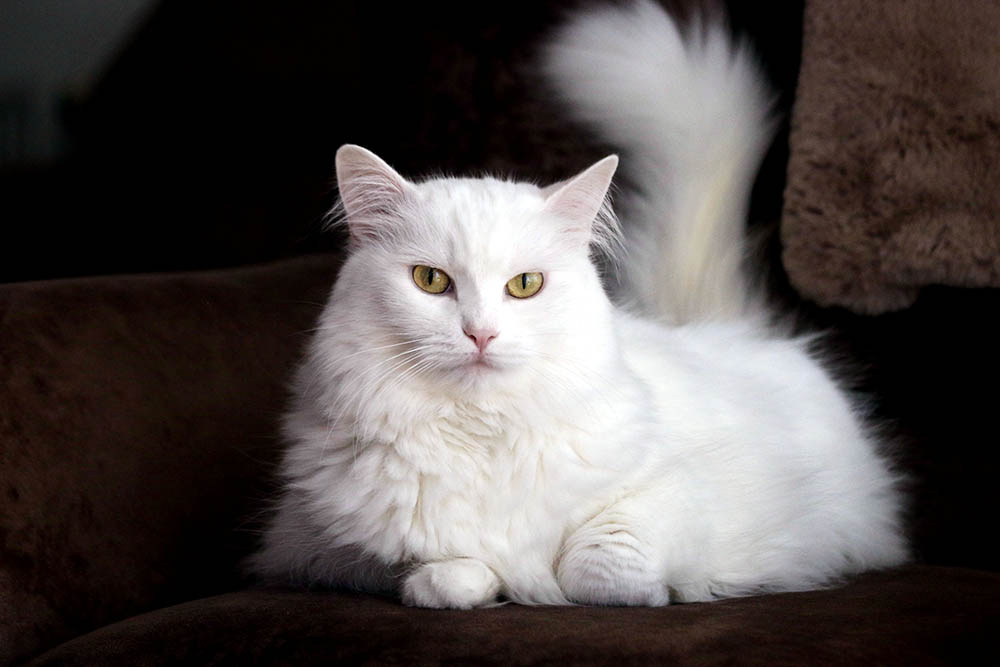
The Turkish Angora is a natural domesticated cat breed that’s energetic and loving, so much so that they even seem dog-like. Its ancestry dates back to Ankara, Turkey (formally known as Angora) as far as the 15th century, where it is still considered a national treasure. They are beautiful, intelligent, and have a sense of grace and elegance. And if you have houseguests, they’ll be sure to play host.
They are excellent with children and prefer families that are home most of the time, as they do not do well when left alone. If you already have other pets in the home, the Turkish Angora will get along with them, but they will establish dominance as the alpha pet. They are also great with seniors and love to be involved in any family activities.
Are you intrigued? Read on to find out more about this rare and intelligent cat breed.
 Turkish Angora Kittens
 Turkish Angora Kittens
This cat breed needs families that are home. If you’re a single individual who’s always out and about, this breed is not for you. The Turkish Angora can be mischievous if it feels it’s not getting enough attention, and that makes for an unpleasant experience for you both. This breed is highly intelligent, makes for a great companion, and wants nothing more than to be around its humans. Their high intelligence allows them to learn tricks, solve puzzles, and even open cabinets and turn on water faucets. They are not lap cats, nor do they like to be held for very long. They can also be vocal, so they will let you know about it if they’re not happy with you.

3 Little-Known Facts About the Turkish Angora
1. This Breed is a Championship Cat
The sleek and beautiful longhaired Turkish Angora cat is not only intelligent and fun but also a champion. The Cat Fanciers’ Association (CFA) accepted the white-colored Angora for championship competition in 1972 in the United States, and all other colors were accepted for competition in 1978.
2. They Are the First Longhaired Cats in Europe
Turkish Sultans gave these elegant cats as gifts to European royalty in the 16th century, and they became highly popular among the privileged European population.
3. The Ankara Zoo implemented a breeding program
In the early 1900s, this breed almost became extinct. However, in the 1950s, the Ankara Zoo set up a breeding program to preserve these felines. The population prospered, and the rebirth of the Turkish Angora cat began. In 1963, an unrelated pair of cats was reluctantly given to Americans Colonel and Mrs. Walter Grant, which led to breeding in the United States.

Temperament & Intelligence of the Turkish Angora
As far as intelligence, these cats exceed with the smarts. They can figure out puzzles with ease and even learn to turn doorknobs, open cabinets, and turn on water faucets. They are loyal, energetic, and fun, but not lap cats. These cats are extroverted and would prefer to explore their surroundings rather than lie on a couch. They usually don’t like to be picked up or held, but they may snuggle with you if you’re taking it easy. They are easy-going and adapt to their surroundings quickly.
Are These Cats Good for Families? 👪
The Turkish Angora is a dedicated family cat, making them a perfect addition for families with children and even other pets. However, children need to be supervised and instructed not to pull the cat’s fur or tail, which could cause the cat to react violently. They do like to be the center of attention, so be prepared to entertain them when the moment strikes. They are also ideal for seniors because of their affectionate side. They love to be with their families, making them a perfect pet for someone who is home most of the time.
Does This Breed Get Along with Other Pets?
These cats get along with other pets, especially dogs, but they will quickly establish dominance with your other pets. Since they are sociable, they do like to play with other pets. Turkish Angoras add entertainment value because of their prankster side, and your canine will be fair game.
 Things to Know When Owning a Turkish Angora:
 Things to Know When Owning a Turkish Angora:
Food & Diet Requirements 🐡
The Turkish Angora needs high-quality adult cat food, preferably one that aids in keeping their coat healthy and minimizes shedding. Be careful not to overfeed this breed—with their fine bone structure, it’s essential to keep them at a healthy weight to avoid obesity.
Exercise 🐈
These cats love to play and tend to get bored, so having plenty of toys and puzzles is imperative for physical and mental stimulation. Treat dispensing toys are great for this breed because of their intelligence—it will give them something to hunt and get rewarded at the end.
Training 🧶
Training should be fun with these intelligent felines because they are such quick learners. They can learn demands and even some tricks. Their outgoing and entertaining personality enables them these abilities, and they want to please their owners.
Grooming ✂️
The Turkish Angora has a long and silky single coat. You should brush them once or twice a week with a fine-toothed comb or slicker brush. They generally don’t mat like other breeds, and they don’t shed quite as much as the average cat. Their coat gets thicker in the winter months, so grooming is a must during this time of year. Surprisingly, the Turkish Angora likes water, so if you need to bathe them, go ahead. Odds are they’ll probably make a game out of it.
Health and Conditions 🏥
The Turkish Angora is pretty healthy due to careful breeding; however, there are some conditions to keep in mind with this breed.
- The white, blue-eyed Turkish Angora cat is more prone to deafness.
- Odd eye-colored cats are also more prone to deafness, particularly in one ear.
- A condition to look out for in this breed is hypertrophic cardiomyopathy, which is when the muscle walls of the heart thicken. If your cat becomes lethargic or has rapid breathing, a trip to the vet is warranted.
Male vs Female
There’s not much difference between the male and the female. One difference we should mention is weight. Males tend to be heavier and taller, but the difference is not significant to even notice.
Conclusion
The Turkish Angora cat is simply one of the best cat breeds around. They have it all—intelligence, charm, grace, devotion, loyalty, energy, sociability, and adaptability. With their almond-shaped eyes, sleek and slender long body, and long silky fur, their appearance is strikingly beautiful. It’s no wonder they are considered a national treasure in their country of origin.
As if their beauty isn’t enough, the Turkish Angora will surely add entertainment to your family and make for a wonderful companion for your other pets; that is, as long as your other pets know that the Turkish Angora is in charge.
The downside to this breed is the slim availability in the U.S. If you manage to find one, this feline will bring much enjoyment to your family and other pets.
Featured Image Credit: Aymara Herrera, Shutterstock