Savannah Cat Breed: Info, Pictures, Care, Traits & Facts

Updated on

| Height: | 14–17 inches |
| Weight: | 12–30 pounds |
| Lifespan: | 12–20 years |
| Colors: | Black, silver, brown, smoke |
| Suitable for: | Active individuals families |
| Temperament: | Playful, affectionate, intelligent, friendly |
The stunning Savannah cat is the largest domesticated cat breed. While the Savannah is recognized as a breed by The International Cat Association, it is a cross between the medium-sized African wildcat, the serval, and a domesticated cat.
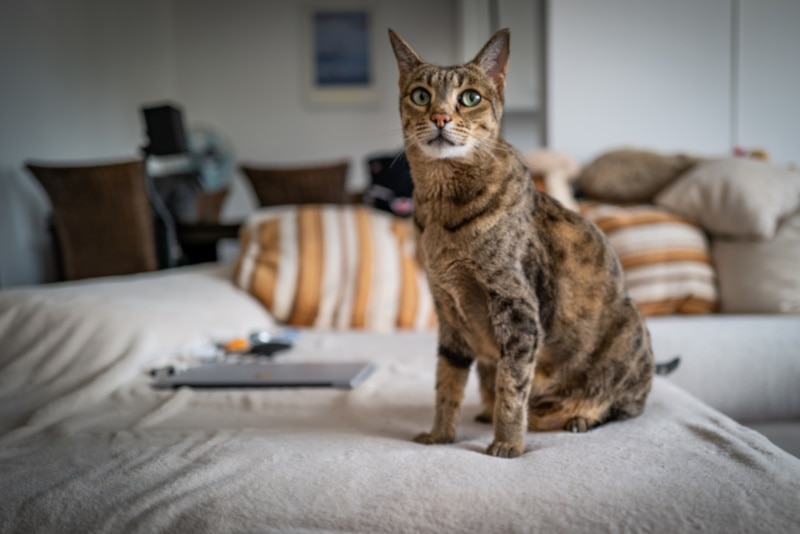
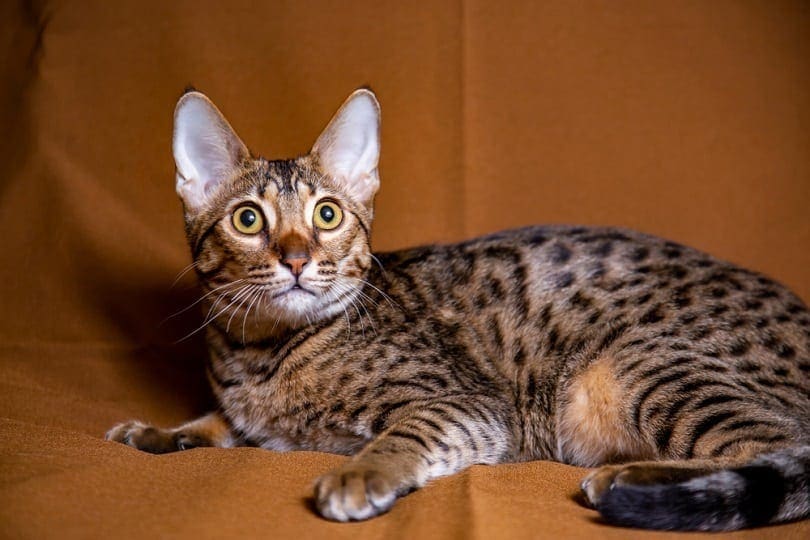
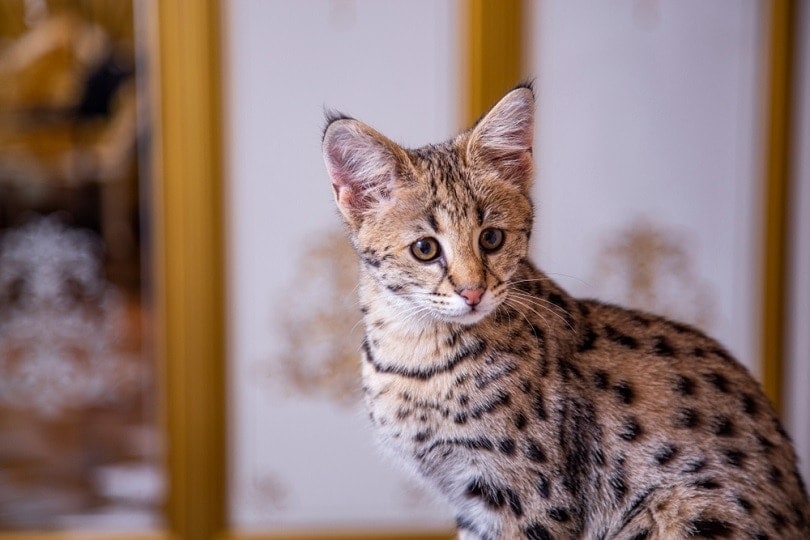
The Savannah cat gets its large ears and height from the serval and is typically 14 to 17 inches tall. Their weight can vary, averaging anywhere from 12 to 30 pounds. This tall, slender breed has a very exotic appearance. Their short, dense coat is spotted with solid, dark brown, or black spots. Savannahs can be black, brown spotted tabby, black silver spotted tabby, or black smoke.
The playful breed is known to act more like a dog than a cat. They bond closely with their family and love to be in their company and shower them with affection. Unlike a lot of cats, they tend to get along well with children and other pets, even dogs.
Savannahs have a lifespan of 12 to 20 years. They are very friendly and intelligent and will always be on the lookout for new adventures and will enjoy playtime and even walk on a leash if trained!

Savannah Kittens
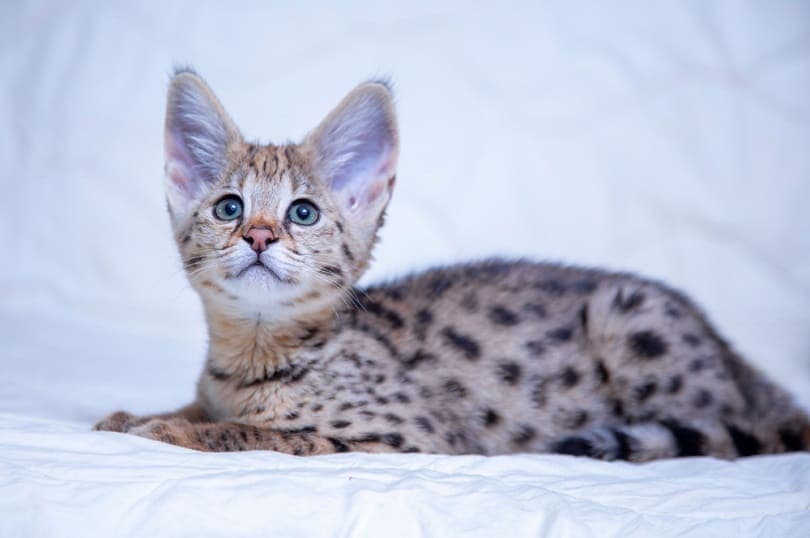
Savannah cats are highly intelligent, active, and social. They need a home that is prepared to give them the physical activity and mental stimulation they require to be at their best. A lot of cats can be aloof, lazy, and couldn’t care less about getting your attention, but not the Savannah.
This breed will need a lot of human interaction. They thrive on affection and attention and will do best in a home that prefers these kinds of feline characteristics and has the time for it.

3 Little-Known Facts About the Savannah Cat
1. They Get the Name Savannah from the First Kitten Ever Produced
The very first Savannah cat was achieved by crossing a wild African serval with a domestic Siamese cat in the 1980s. The first kitten born in the litter was named Savannah, which led to the name of this breed. The Savannah cat received official recognition from The International Cat Association in 2001.
2. Savannah Cats Love Water
To add to the Savannah’s list of un-catlike tendencies, the Savannah is known to enjoy playing and swimming in water. Owners should not be too surprised if their Savannah tries to regularly join them in the bath or shower.
3. There are Five Categories of Savannah Cats
The Savannah is split into five categories that reflect the percentage of wild serval in their genetics. The more serval genetics, the higher the cost.
- F1 50% or more Serval
- F2 30-49% Serval
- F3 19-29% Serval
- F4 15-18% Serval
- F5 11-14 % Serval
 Temperament & Intelligence of the Savannah Cat
The Savannah is friendly, full of personality, and impressively intelligent. Due to their high intelligence, they are very active and curious and require lots of mental stimulation and human interaction. They may be a bit overwhelming for first-time cat owners for this reason.
Many Savannah owners claim their cats have a sense of humor and will be no stranger to silly antics at their owner’s expense. You can expect a high-energy playmate that rarely tires and will love to snuggle up in bed with you at the end of the day, that’s if they aren’t dedicated to causing nighttime mischief.
You will want to keep their brains challenged by providing a variety of toys, puzzles, treats, and playtime.
Are These Cats Good for Families? 👪
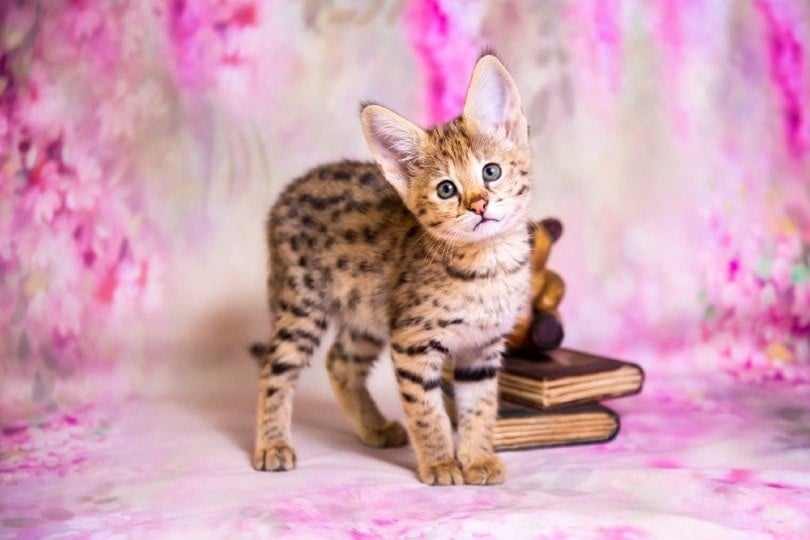
Since Savannah cats are so active and social, they can make great pets for families with older children. They may be a bit rambunctious and ornery with younger children, which is why they’d fare better with older ones. That’s not saying they won’t do great in a home with young children, but more precautions should be taken to ensure the safety of both the cat and the children.
The Savannah makes for a fun addition to a household that is prepared for them. They can easily learn tricks, enjoy lots of play, and love being showered in affection from members of the family.
Does This Breed Get Along with Other Pets?
Unlike most cats, Savannah cats typically do great in homes with other pets. Their high level of sociability and playfulness will have them seeking out playmates for some high-energy fun. As expected, Savannahs can have a prey drive so it’s best to keep any small, caged animals safe like you would with any other larger pet.
Savannah cats are well known for making fast friends with dogs and will typically tire them out with play. You can expect the Savannah to be the last one standing.
- Related Read: 10 Tips To Make Cats And Dogs Get Along
Things to Know When Owning a Savannah Cat:
Food & Diet Requirements 🐡
Feeding a Savannah kitten is much different than feeding a regular kitten or a full-grown Savannah cat. Savannah kittens go through different feeding phases as they age. They are typically weaned from their mother and placed on a raw, ground chicken diet supplemented with vitamins and minerals.
Around 9 to 12 weeks it is usually recommended the kitten is weaned off raw chicken and introduced to wet cat food. Then slowly, over time, introduce them to dry food as they age. You will want to bring this up with your veterinarian at your well-kitten visits.
You’ll want to provide your adult Savannah cat with high-quality, protein-rich cat food and follow feeding instructions based on your cat’s weight and activity level. It is highly recommended you consult with your veterinarian if you have any questions or concerns. Always ensure your Savannah has access to plenty of fresh water for hydration.
Exercise 🐈
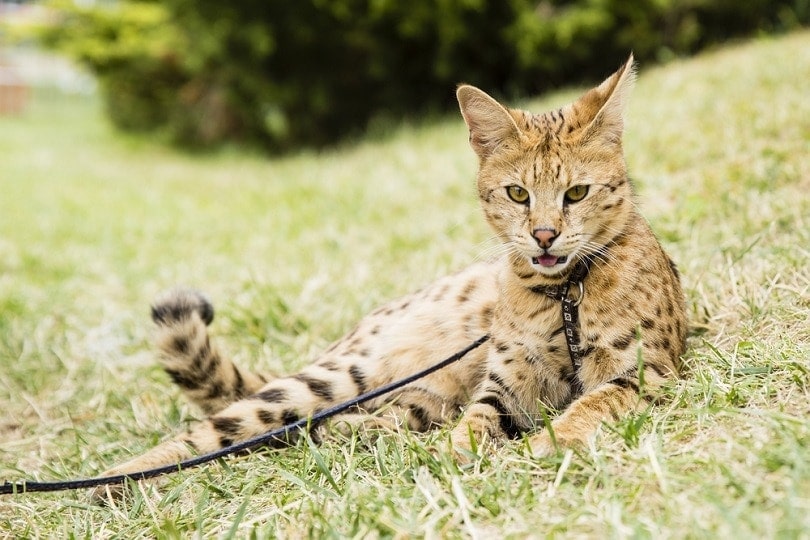
Savannahs are extremely athletic and active cats. They love to climb and enjoy being up high. It is a necessity to provide this breed with a lot of toys, perches, and tall cat trees. The Savannah will require a lot of exercise and can even be trained to walk on a leash and enjoy daily walks with their owners.
Their high energy level and play drive will likely tire out any other pets in the household. They will always be searching for new forms of play and ways to keep themselves entertained. Since they adore human interaction, they love rigorous playtime with their people.
Training 🧶
Savannah cats are highly intelligent and may have a lot of dog-like tendencies, but they are not as easy to train as our canine friends. They can most definitely be trained to follow some basic commands, but they are still cats and will not reach dog-level trainability.
If you decide to train your Savannah cat, remember that they are still cats and can be a bit skittish. You will want to start slow, be consistent, and use positive reinforcement by providing treats and affection.
Grooming ✂️
Savannahs have short, soft dense coats that are very easy to maintain. A weekly brushing will suffice with this low-maintenance fur. Savannahs are usually big fans of brushing and will enjoy spending time with you.
In addition to weekly brushing of the coat, you will want to ensure they have scratching posts to keep their nails filed down. You may not have to worry about trimming regularly but it’s best to have them accustomed to nail trims.
Make sure you check their ears regularly to ensure they are clean and not showing any signs of infection. It’s best to regularly brush their teeth and keep up on dental health to prevent any dental disease. You will want to introduce your Savannah to tooth brushing from an early age, as it can be a difficult task if they are not used to it.
Health and Conditions 🏥
Savannah cats are an impressively healthy breed with no known genetic health conditions. As with most pets, they can be at risk for dental disease if proper dental care is neglected. Due to their intense activity levels, they can be prone to muscle tears.
 Male vs Female
 Male vs Female
Male Savannah cats tend to be a bit larger than females but because of their hybrid genetics, there can be significant variation in size within a litter. Individual Savannah looks and characteristics can depend greatly on the type of generation and the percentage of serval they have.
Final Thoughts
If you’re looking for a not-so-cat-like cat, the Savannah may be the right choice for you. These tall, slender, exotic-looking felines have unmatched intelligence, a great sense of humor, and more energy than a sugar-filled toddler.
Since they are such a social breed, they require much more human interaction than your average cat. They will form significant bonds with their owners and want to always be in their company. You can expect a lot of love and affection from the unique cat, as well as a hefty price tag.
While they may not be as trainable as a dog, they exhibit a fair share of dog-like characteristics. Overall, the beautiful Savannah cat can make a wonderful pet for the right person or family.
See also:
- Black Savannah Cat: Facts, Origin & History (With Pictures)
- European Shorthair Cat: Info, Pictures, Characteristics & Facts
Featured Image Credit: Kolomenskaya Kseniya, Shutterstock