Russian Blue Cat: Info, Pictures, Care, Traits & Facts

Updated on

| Height: | 8 to 10 inches |
| Weight: | 7 to 15 lbs |
| Lifespan: | 15 to 20 years |
| Colors: | Blue/gray, silver |
| Suitable for: | Families with other pets and kids, seniors |
| Temperament: | Neurotic, shy, affectionate, intelligent, playful, independent |
The Russian Blue is a purebred cat with a gentle and loving personality. This breed fits the picture of a perfect companion or a family member.
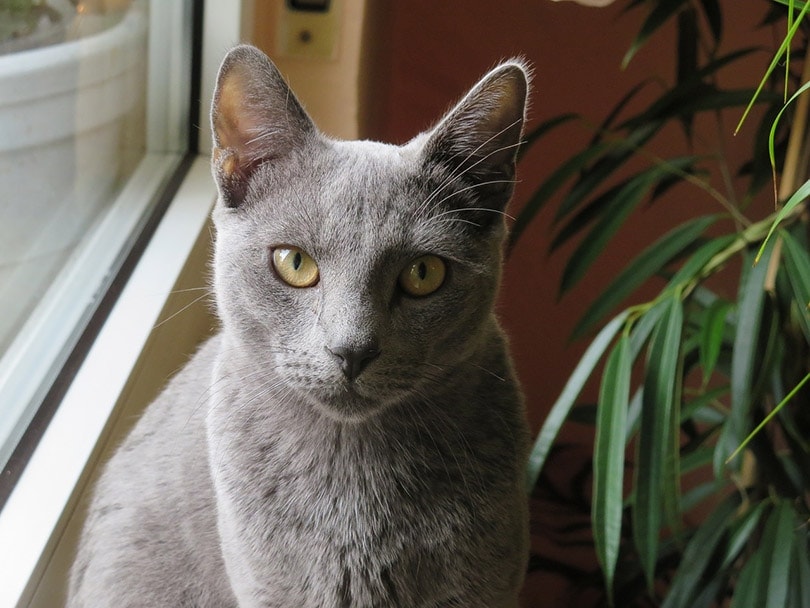
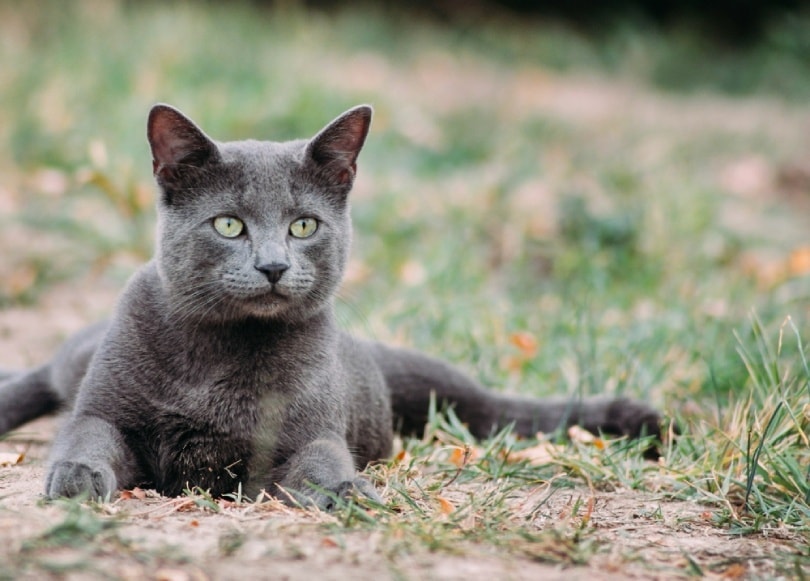
The cat looks like a regal animal with its triangular-shaped head, straight nose, broad forehead, and slender stature. The Russian Blue is strong, muscular, and robust despite its long slender body and can run at high speeds. Owners love this cat for its ‘natural’ smile. But in reality, the cat is not usually smiling. The corners of its mouth have a slight upturn that makes the smiley face. But it wouldn’t hurt to tell your guests that your pet is forever smiling.
Owners also love that the cat’s eye color changes over time. Russian Blue’s kittens have light yellow or golden eyes. At 4 months, they turn yellow with a green ring and then bright green during adulthood. And did you know it gets its bluish-gray color with a silvery sheen from a diluted black gene? Yes, instead of having a black shade, the gene gives the cat its bluish-gray color.
This cat may appear larger because of its extremely dense double coat. Its coat is soft and silky with a dark gray shade with shimmering silver. The Russian Blue is considered hypoallergenic because it has lower levels of feline allergies and sheds lightly.
This kitty is friendly, affectionate, and playful around family. However, it is reserved or absent in the presence of strangers. The cat is highly independent and will entertain itself when you are not around. But the minute you walk home, this cat will become your second shadow. It will follow you around without obstructing you.
Are you falling in love with this breed? Read on to learn more.

Russian Blue Kittens
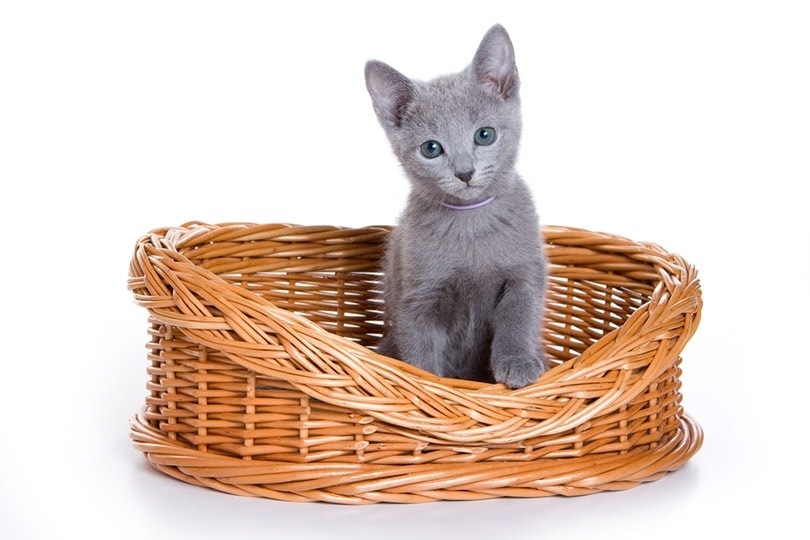
Prices vary greatly among breeders. Should you buy your cat from an unregistered breeder, you’ll get it at a cheaper price, which may prove expensive later on.
Other than the buying price, you need to purchase toys, litter boxes, furniture, blankets, feeding bowls, treats, and cat food. You also need to meet veterinary costs and consider pet insurance.
Russian Blue Cats have distinctive physical features and a unique personality. These cats are friendly and will often show lots of affection toward their favorite humans.
 3 Little-Known Facts About the Russian Blue Cat
 3 Little-Known Facts About the Russian Blue Cat
1. Its Smile Has Been Compared to Mona Lisa’s
You probably know of the iconic Mona Lisa painting. It turns out, the Russian Blue’s natural smile looks similar to Mona Lisa’s. Or, at least, that is what some people think.
2. There Are Different Theories About Its Origin
There are several beliefs of where the Russian Blue came from. Some people speculate that the cat lived in the wilderness and hunted for its thick, dense, and unique colored fur. Another belief states that these sleek kitties were esteemed pets of royals and Russian czars. It is believed that the royals considered them omens of good luck the same way Egyptians honored tuxedo cats. Ancient folklore narrates that these cats were kept in a newborn’s room to ward off evil spirits.
The most believed theory is that they came from the Archangel Isles or Arkhangelsk in Russia. British sailors were fascinated by the cat and carried it with them to Great Britain. The cat’s warm and thick coat proves useful in this narrative, as it protected them during harsh winters.
3. The Cat Is Not 100% Hypoallergenic
The Russian Blue produces less protein Fel D 1, which is the root of most allergic reactions. The protein is usually transferred by saliva and skin secretions. This means that allergy sufferers can live in harmony with the Russian Blue cat.
However, it is worth noting that the breed produces low levels of Fel D 1. Low levels do not equate to zero levels. Therefore, these small amounts of protein can cause an allergic reaction. Plus, they do produce dander that can cause sneezing, itching, and wheezing.
Temperament & Intelligence of the Russian Blue
The Russian Blue is an intelligent cat breed. You can easily train your pet to play fetch. However, the exercise will not be as easy as training a dog. Additionally, this kitty responds when spoken to, which makes them a perfect companion for singles.
This breed is playful, affectionate, gentle, quiet, well-behaved, and polite. These kitties adore their owners and will follow them around. Some cats are happy to ride on their owner’s shoulders as they go about their business.
The Russian Blue is polite toward trusted humans and believes they, too, should be polite. Therefore, this kitty dislikes anyone who makes it look silly and never forgets the offense. What a dignified cat! However, they are also sensitive and hate being ignored.
Russian Blues are loving and affectionate with family. However, they are reserved and shy when strangers come knocking. It is not unusual for the cat to hide at a higher ground to survey your guests. And if one stranger catches their attention, the cat will not hesitate to shower its affection towards them.
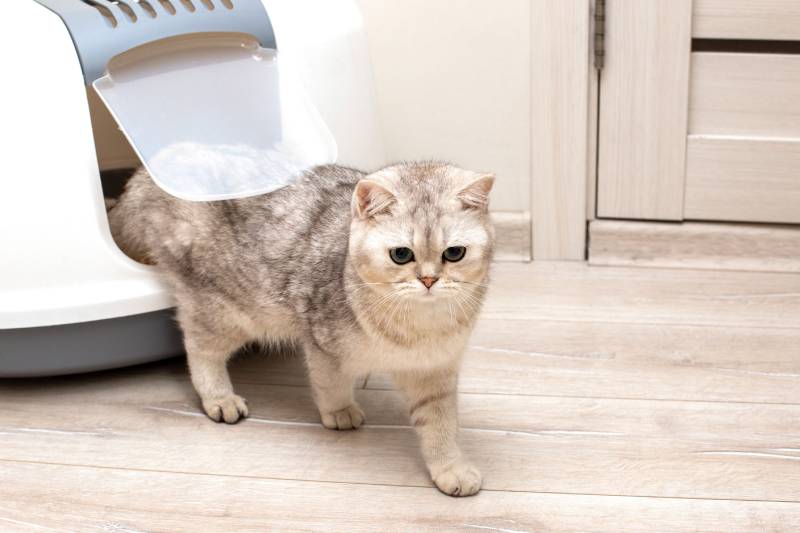
This kitty is vocal when it comes to cleanliness and routine. They are notoriously clean and prefer using a spotless litter box. A dirty litter box may drive your cat into doing its business on cleaner areas of your home.
Russian Blues are excellent climbers and very adventurous. To keep them safe, ensure that you block all dangerous spaces and install childproof locks. Additionally, these cats are independent and won’t mind your absence during the day, but they will welcome you happily after work, follow you around, and lie next to you as you relax.
Are These Cats Good for Families? 👪
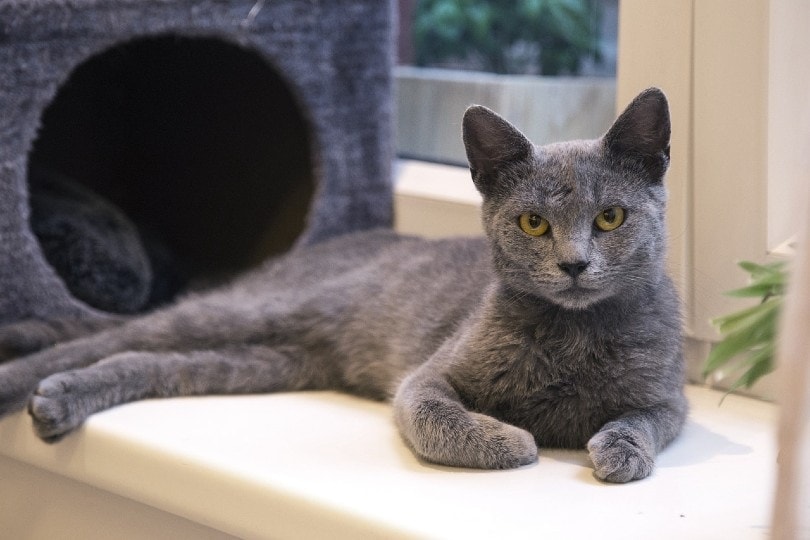
They sure are. These cats will appear reserved when you bring them home, but do not worry. With time, your pet will become an affectionate family member. The Russian Blue will even try to cheer you up by patting your face or attempting to soothe a crying baby.
The kitty’s playful nature makes them a great playmate for your kids. In fact, this breed rarely bites or scratches. However, teach your kids not to startle the Russian Blue. They dislike loud noises but love a calm environment with predictable routines.
Furthermore, their gentle, quiet, and affectionate nature makes them ideal for the elderly, singles, first-time owners, and families.
Does This Breed Get Along With Other Pets?
The Russian Blue gets along well with other cats, but it may take a while for them to get along with dogs. If your canine is friendly towards cats, well, the two may strike a friendship.
On the other hand, this cat has strong hunting instincts. It may chase other small house pets, like mice and hamsters.
Things to Know When Owning a Russian Blue Cat
Food & Diet Requirement 🐡
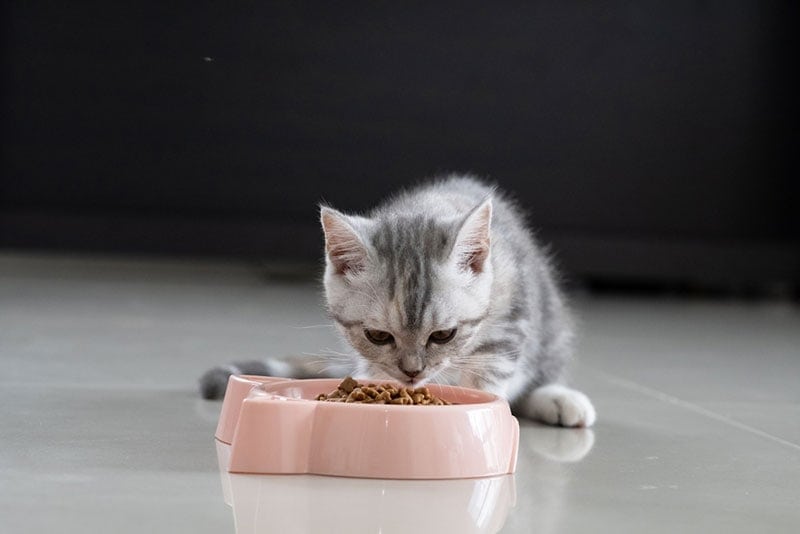
One thing is certain about the Russian Blue: it loves mealtimes. They will ask you to feed them several times a day and won’t be happy if you delay their meals. For this, find a high-protein diet, stick to a regular feeding routine, and remain firm about the servings. The breed is susceptible to obesity, and anytime you overfeed your pet, you decrease their quality of life. Ask your vet about the best cat food for your pet. Additionally, provide fresh, clean water throughout the day to promote your cat’s bladder health. Good drinking habits reduce the likelihood of your pet developing a urinary tract infection.
Exercise 🐈
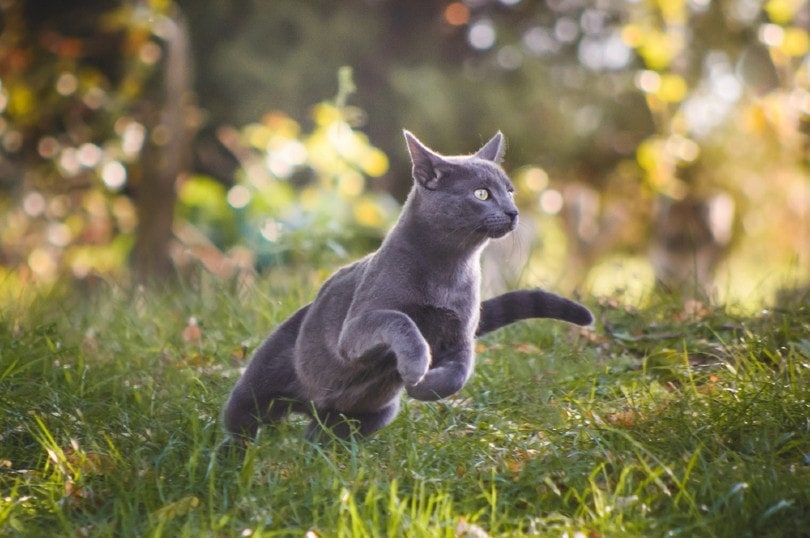
The Russian Blue is moderately energetic and does not need special exercises. They will tiptoe with the grace of a ballerina into new environments rather than rush. They will also spend much of the day basking in the sun or sleeping in a quiet, peaceful spot.
These cats retain a playful nature in their adult age, which helps them stay in shape. You can purchase feather wands and feather toys to keep the cat engaged. Chasing a laser light can also help your pet burn the extra calories.
Training 🧶
Most pet owners dismiss the idea of training a cat. But the Russian Blue is highly intelligent and can learn a few tricks to entertain its owner. It will also adapt to litter training, obedience training, and leash training.
Reward the cat with treats and rewards for every desirable behavior. Never shout or yell at a Russian Blue to prevent stressing it.
Grooming ✂️
Russian Blues are considered hypoallergenic and shed less. Their thick double coats need brushing twice a week to remove excess hair and distribute oils on their skin, but you can increase the brushing sessions during the shedding season.
Clip your cat’s nails once a week to prevent them from breaking or getting caught in furniture or carpet. Wipe their ears with a cotton ball dampened with a vet-recommended cleanser once a week. Doing so will reduce the risk of ear infections. Also, brush their teeth regularly to prevent gum disease and tartar build-up.
Health Conditions 🏥
Russian Blues are generally healthy and can live for up to 20 years, but they are not immune to health problems. As previously mentioned, they are prone to obesity and urinary tract problems. But with the right diet, these are preventable.
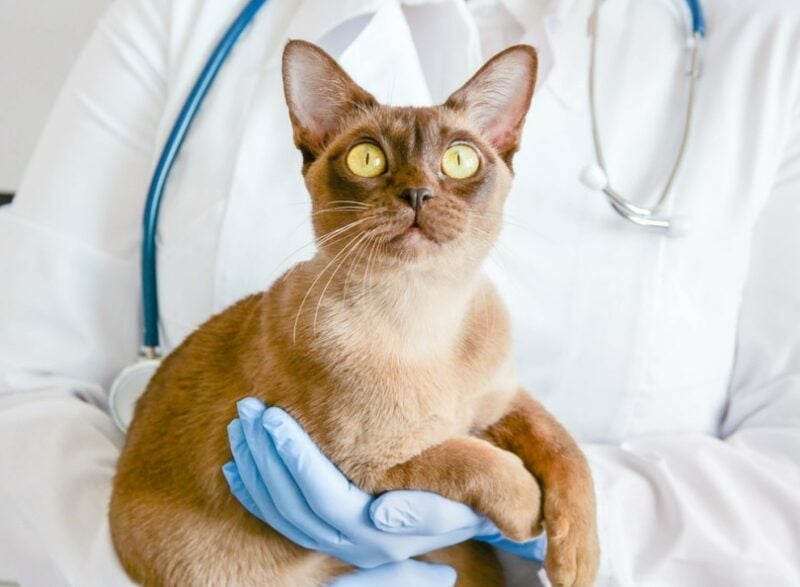
Frequent vet check-ups and vaccinations can also help keep your Russian Blue healthy. In addition, keeping your cat indoors can prevent your cat from contracting feline-transmitted diseases.
Here are other conditions to watch out for.
- Cystitis
- Bladder stones
- Deafness
- Cataracts
- Glaucoma
- Kidney disease
- Hip dysplasia
Male vs. Female
Male Russian Blues appear larger than females, but they both have plush fur that disguises their actual size. Both genders make great pets because they are playful, intelligent, loving, and loyal. It all comes down to which gender you prefer as your companion.
Final Thoughts
The Russian Blue is a friendly and sociable family pet. They will get along well with children and other pets provided the environment is calm and peaceful. They are highly intelligent and trainable for games like fetch. They are also independent and do not mind being left alone for long.
However, the Russian Blue is a big eater, making the breed prone to obesity and weight-related diseases. They tend to be shy with strangers and dislike changes in routines. Other than that, this cat breed is a great companion for other pets, kids, and families.
See Also:
- What Is the History of Russian Blue Cats? The Fascinating Story!
- Do All Russian Blue Cats Have Green Eyes? Breed Characteristics Facts
Featured Image Credit: Review News, Shutterstock