Maine Coon Cat Breed: Info, Pictures, Temperament & Traits

Updated on

| Height: | 19 – 40 inches |
| Weight: | 7.9 – 18 pounds |
| Lifespan: | 13 – 14 years |
| Colors: | Nearly anything |
| Suitable for: | Families looking for an active family cat |
| Temperament: | Active, intelligent, focused |
The Maine Coon is easily one of the largest domestic cats. They are also one of the oldest breeds of domestic cats in North America, likely the result of breeding cats that came over with the first European settlers. They were particularly common in the northern states, such as Maine, where the cats needed longer fur to survive.
Known for their serious hunting abilities, these cats were likely prized by settlers for keeping their fields and barns mouse-free. Today, they still have these hunting instincts, which makes them a great option for those on farms and with mice problems.
This feline is often known for being “dog-like.” They can be taught to perform tricks and are quite playful. Many are devoted to their people and love interacting with them. Unlike most cats, they are usually not aloof toward strangers and enjoy attention. Many are fond of playtime and have a high level of energy despite their larger size.

Maine Coon Kittens
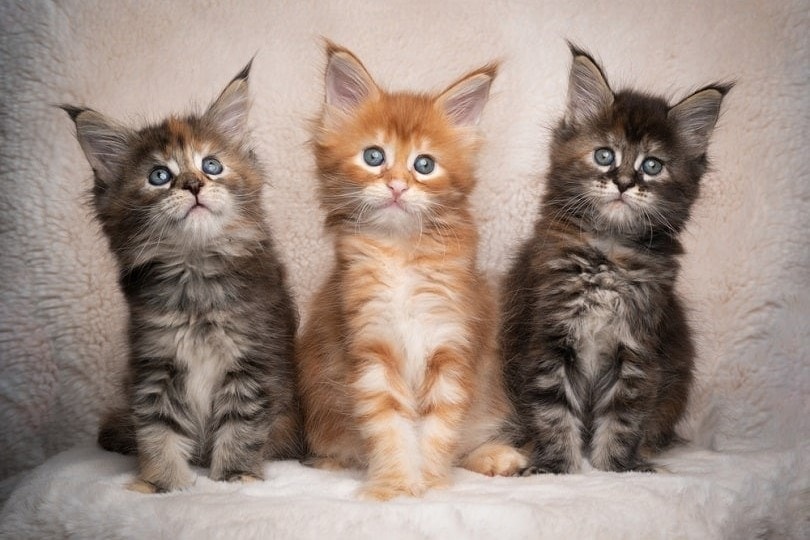
Not all Maine Coon kittens are created equal. Some are extremely rambunctious or playful, while others are curious or shy. But every Maine Coon kitty is affectionate and loyal to their human family members. One of the greatest things about Maine Coons is that they often keep their playfulness well into adulthood, so even though they become much more independent, they are always up for a little game of chasing the laser.
Temperament & Intelligence of the Maine Coon
The Maine Coon is often known as a “gentle giant.” These cats are quite laidback and gentle, despite their rather large size. They are known for being more intelligent than your average cat, which makes them easy to train. They can be taught to do basic tricks and many even like to play fetch.
These cats are often quite loyal to their family and affectionate. They may follow their people around the house but aren’t so clingy that they can’t spend time alone. Often, they are either cautious or friendly with strangers. They aren’t known for hiding or being aloof like other cats. They are extremely good with children, dogs, and other cats due to their laidback nature. They don’t care much about rambunctious children or noisy dogs. Their large size makes them quite fearless, which contributes to their laidback nature.
They aren’t usually “lap cats.” Instead, they can be quite active, which often means that they need plenty of playtime and space to roam. They do best in a larger house for this reason. However, many can be taught to walk on a leash and exercise in this manner too.
They often keep their kitten-like playfulness well into adulthood. Maine Coons love playtime and will often play games that are traditionally for dogs, like fetch. Once they are worn out, it isn’t odd for them to want affection. However, they are often more activity-seeking cats than lap cats.
The Maine Coon is known for being vocal. For this reason, we don’t recommend them to anyone who is looking for a quiet cat. This breed simply doesn’t fit that description. They can make different vocalizations and noises, including chirping and yowling. Expect them to “talk” almost constantly, especially when they want something.
Are These Cats Good for Families? 👪
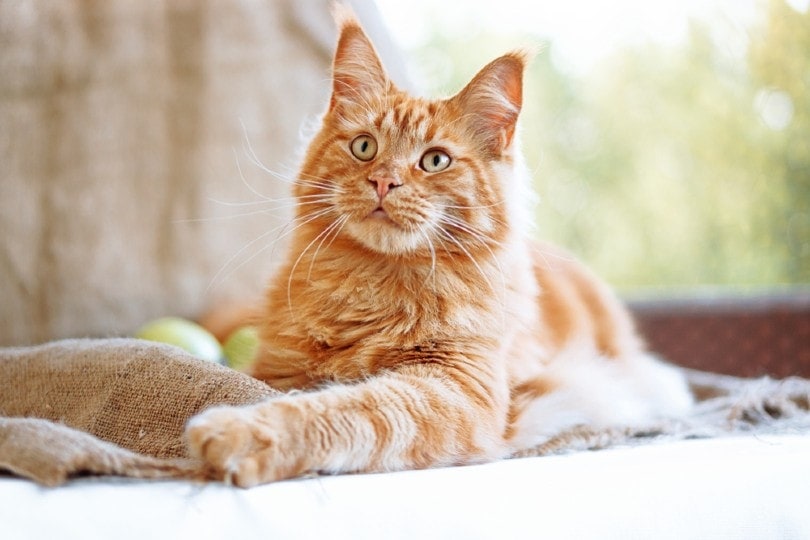
Yes, the Maine Coon is often large enough to be confident around children. Unlike other cats, they are not commonly scared around kids and don’t usually hide. Instead, they treat them exactly like they would any other human. Many are quite playful, which can leave many openings for children to interact with them.
Even very young children can throw a toy mouse for a Maine Coon or play with a cat wand. Of course, it is still important for children to be taught how to interact with these cats properly. Although the cats won’t generally be scared, a few bad encounters can make them think twice about getting near children again.
We highly recommend socializing these cats often with kids if you plan for them to be a family pet. If you already have children in your home, this is probably already taken care of.
- See also: Maine Coon & Siamese Cat Mix
Does This Breed Get Along With Other Pets?
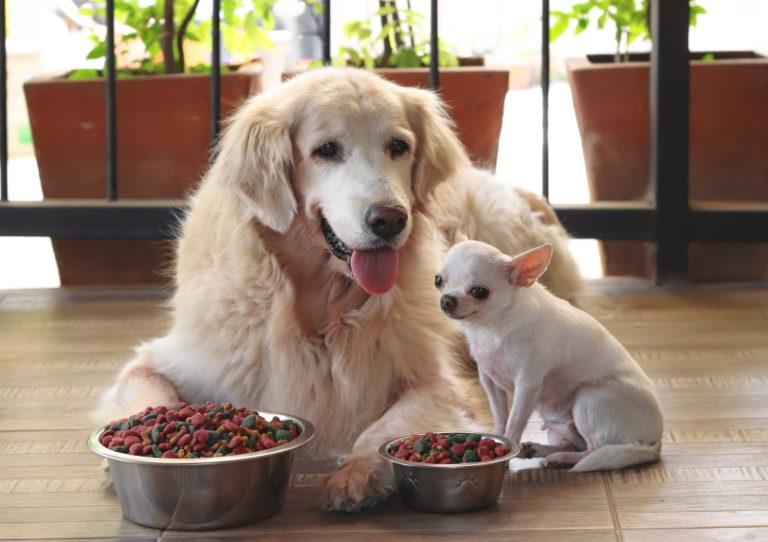
They are typically okay with non-prey animals. They can get along with most dogs easily, as they are less fearful than other cats. Many of them may play with dogs without much of a problem. This is especially true if they are kept around dogs starting at a young age.
Maine Coons are also good with other cats. They aren’t particularly territorial or fearful. Their nickname “gentle giant” also refers to how they interact with other cats. Two Maine Coons can get along perfectly well together.
Of course, there is a level of personality at play here. Some cats simply don’t enjoy other cats at all. Some adult Maine Coons may be scared when introduced to a dog for the first time. In general, though, these cats are extremely friendly toward others and aren’t prone to fear-based reactions.
That said, Maine Coons are not good with anything that could be considered a prey animal. They will try to hunt and kill most rodents, including rabbits. Their larger size gives them the ability to do this as well. They can even hunt and kill animals that are somewhat larger than them. Their extreme prey drive simply makes them unable to be left in the same room with prey animals.

Things to Know When Owning a Maine Coon
Food & Diet Requirements 🐡
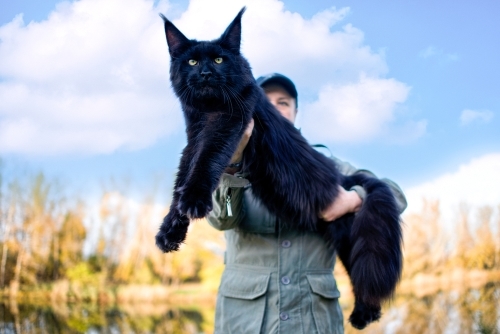
Maine Coons typically don’t need a special diet. Most of them do just fine on a high-quality commercial diet that you would feed to any other cat. Of course, they will typically eat more due to their large size and active nature.
It is always a good idea to feed them at least some wet food, as cats can have a hard time getting all their moisture needs from water bowls alone. In the wild, cats get their moisture from the prey animals that they eat, so it is often best to mirror this at home. However, dry food helps keep your cat’s teeth clean, so you don’t want to feed them completely wet food either. A mixture is often your best option.
Maine Coons that are not exercised properly can easily become overweight. Some people may attempt to overfeed their Maine Coon to “bulk” them up and result in a heavier cat. However, this often leads to more joint stress and more health problems down the line.
You should also ensure that your cat is fed in a suitable bowl. Plastic is a no-go because it can easily be scratched. Bacteria can grow in these scratches, which are nearly impossible to clean appropriately. This may eventually lead to your cat getting sick. Instead, choose a stainless-steel bowl. These are easy to clean and resist bacteria.
Exercise 🐈
Compared to other cats, the Maine Coon is quite active. This is one reason that they are such good mousers. They spend more time hunting and less time sleeping than other breeds. Most people do not live on farms or ships, though, so there are typically not many mice for a domestic Maine Coon to hunt. Instead, they have to meet their exercise needs through other means.
Luckily, the Maine Coon is quite intelligent and can easily be taught to do things that some other breeds refuse to participate in, like walks. If you begin at an early age and do it correctly, Maine Coons can be taught to walk on a leash. Since they generally aren’t scared of much, they are typically more self-confident while outside.
With their ability to walk on a leash, a Maine Coon can easily meet their exercise needs in the same way that a dog can. Plus, this is much safer than letting them wander around outside since you are there to supervise them and ensure that they don’t get into trouble.
Maine Coons also love playtime. Many will express their love through play, as opposed to cuddling, like most cat breeds. We recommend keeping your house regularly stocked with interesting toys. You may want to switch toys out regularly to keep them new and entertaining.
We recommend playing with your cat for about 15-20 minutes before bedtime. This will wear them down for the night and help meet their exercise needs. Of course, more playtime at different parts of the day is also recommended. Unlike dogs, cats typically do best if you exercise them for short periods throughout the day instead of with one long play session.
You can also install cat trees in your house, which provide them with ample room to run and climb. Maine Coons are good climbers, so they will typically climb just about anything that they can find. Providing them with somewhere appropriate to climb may prevent them from climbing your furniture.
Training 🧶
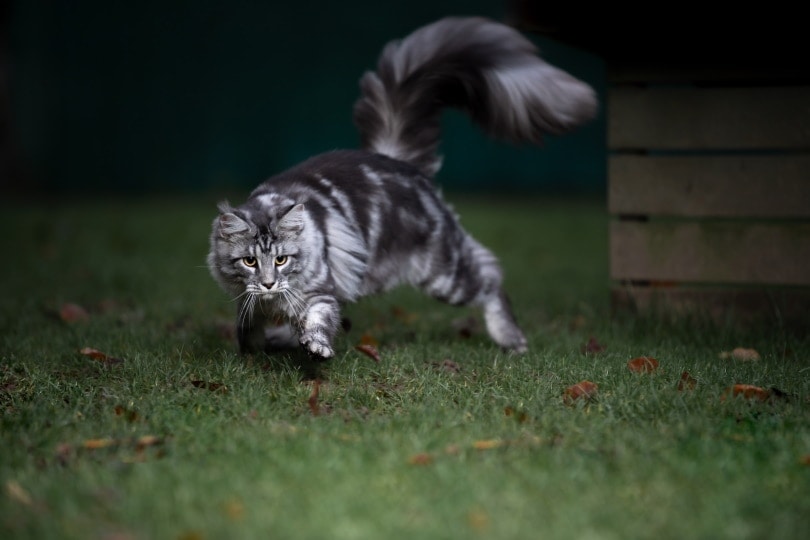
Maine Coons are surprisingly easy to train. They are intelligent cats that are responsive to their owners, which leaves you with an extremely trainable feline. These cats will pay attention when you have a bag of treats or a toy in hand. Some cats may just be as toy-driven as they are food-driven. Therefore, it may be easy to train them with toys, and you can cut back on the extra calories from the treats.
You start training a Maine Coon in the same way that you train a dog. Using only positive reinforcement is important. If you punish a cat, they are likely to just stop participating in the training sessions. You can often “guide” a cat into certain positions. For instance, you can guide your feline into a sitting position by moving the treat toward their hind end. This will prompt them to sit as they follow the treat.
If you’ve trained a dog before, you can probably train a Maine Coon without too much of a problem. You can teach your feline various tricks, ranging from sitting to “high fives.” Most tricks that a dog can learn can also be learned by a Maine Coon.
You can also train them in practical endeavors. For instance, you may want to consider training them to walk on a leash so it is easier to exercise them. You can start this by getting them accustomed to wearing the leash inside. Simply put it on them for a few minutes with plenty of praise, and then take it off. You can then teach them to follow you while on the leash by guiding them with treats. Once again, stay inside.
Once your cat is used to following you around while on a leash, you can move them outside. You should start by just spending a few minutes in the yard, but you can increase the length of the walk as they become more comfortable. You shouldn’t automatically start with long walks, as your Maine Coon may tire faster than you’d expect. Walking is a different kind of endurance than jumping and climbing.
Grooming ✂️
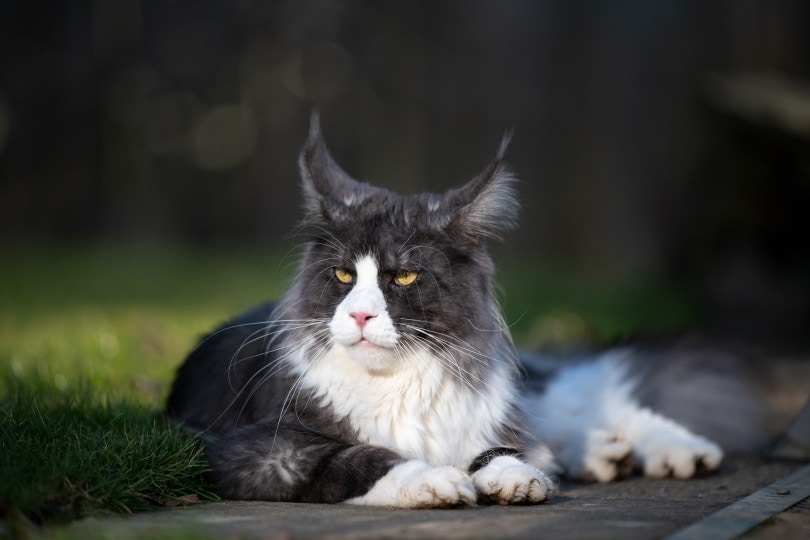
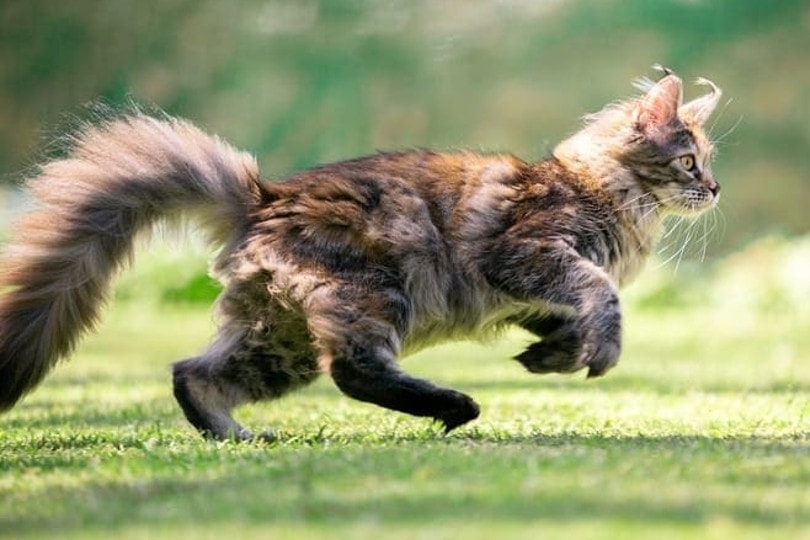
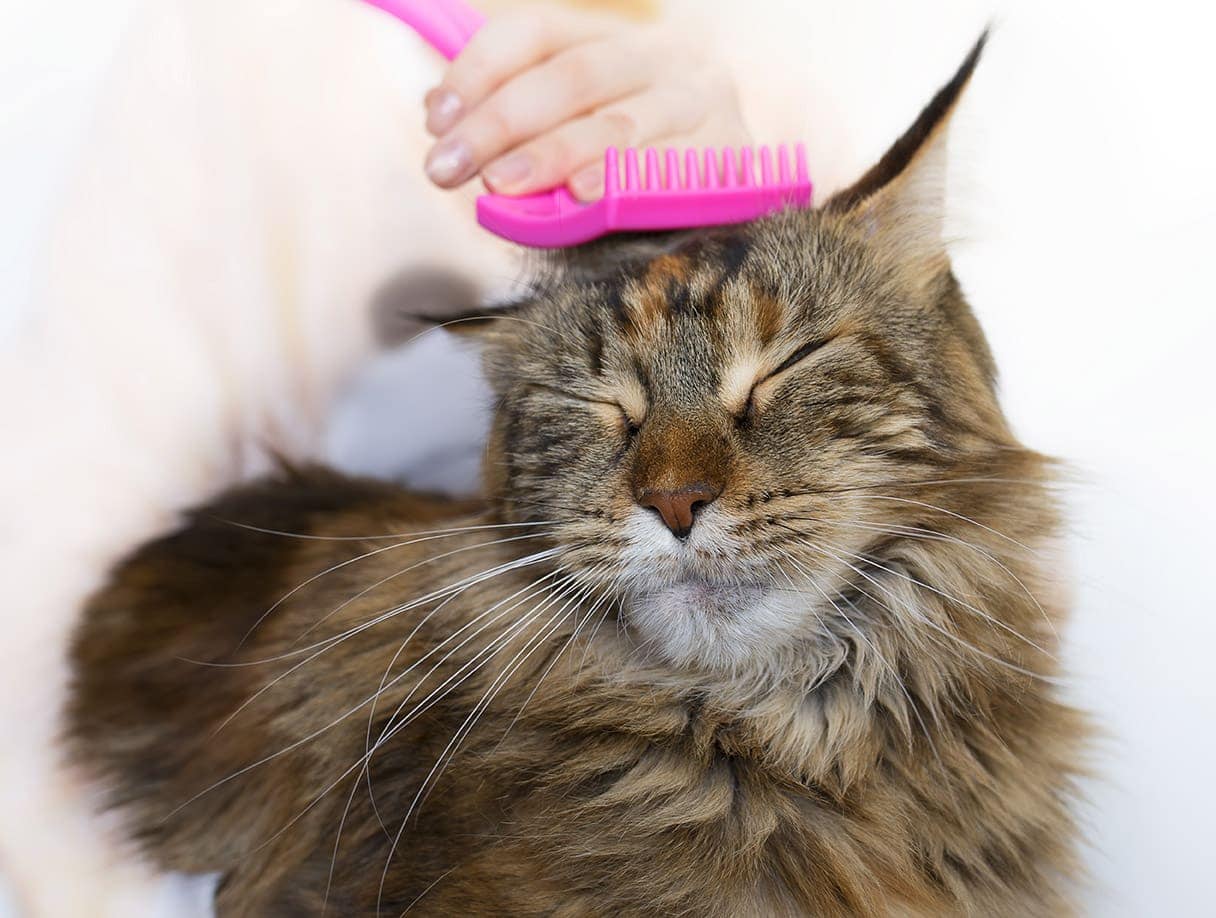
With their longer coat, you’d imagine that these cats require a great deal of grooming. However, this is not typically the case. Like all cats, they are good at keeping themselves clean. That said, they do require a certain amount of grooming. The average Maine Coon will need weekly to daily grooming sessions. Many will shed more seasonally, so you will have to adjust their grooming throughout the year.
You should start grooming them when they are fairly young. This will get them used to the grooming process, even though they typically won’t need much as kittens. You must get them accustomed to being brushed everywhere, including their hindquarters and belly. Be consistent when it comes to grooming as well. Start in the same place and try to make the movements the same. This will help your cat learn what to expect.
Use a soft bristle brush to easily remove hair while also keeping your cat comfortable. Many dog brushes are simply not suitable for them, as they may be a bit too rough. Most cats are sensitive to the roughness of their brushes.
Some people choose to clip their cat’s fur, but this is typically not necessary. You will need to trim the fur on the bottom of their feet, though, as it can get troublesome and small mats can develop. As long as you brush your cat regularly, however, their fur should stay mat-free and clean.
You shouldn’t need to bathe your cat unless they get dirty. For instance, tree sap can be difficult to remove from your cat’s fur without bathing. For this reason, you may want to bathe your cat occasionally, just so they know what a bath is and understand that it isn’t scary.
Did you know that there are a variety of colors and patterns Maine Coons can come in, including black, tabby, and tuxedo? Click the links to find out more!
Health and Conditions 🏥
- Polydactylism
- Hip dysplasia
- Feline hypertrophic cardiomyopathy
- Spinal muscular atrophy
- Polycystic kidney disease
Maine Coons are typically healthy cats. They aren’t prone to many health conditions because they are quite hardy. However, they are still prone to a few problems due to their larger size, such as hip dysplasia. It is important to avoid overfeeding them as kittens. Too many calories can quickly lead to overgrowth, which can mess with their joints.
Feline hypertrophic cardiomyopathy is also a common problem found in Maine Coon cats. It appears to be genetic, though it isn’t clear exactly how transmission works. Carrying the gene doesn’t necessarily mean that your cat will get the disease. However, those that do develop it often pass away quickly.
Spinal muscular atrophy is another common genetic disease. The signs become apparent rather early in life, usually around 3-4 months. Usually, this disease isn’t fatal, but it does cause muscle weakness.
Polycystic kidney disease is also possible. It is an inherited disease that makes the cat develop multiple cysts on their kidneys. Usually, these cysts exist from birth and grow over time. Eventually, they may disrupt kidney function. Cats are screened for this disease when they are bred by professional breeders.
Many Maine Coons can also have polydactylism, which simply means that they have more than one toe on a paw. It is somewhat rare, as this trait is not allowed in the show ring. This trait doesn’t affect much, and cats typically live a similarly full life to other felines. It doesn’t seem to have any effect on their overall health.
Male vs. Female
Males are larger than females, but this is the only major difference. There is no significant difference in temperament between the two sexes.
3 Little-Known Facts About the Main Coon
1. They are the official cat of Maine.
As you may have guessed from their name, this breed of cat is prolific in Maine. This is likely where they first came into existence. This has prompted the state to name them its official cat.
2. The Maine Coon takes a long time to finish growing.
Mostly due to their large size, this breed takes quite a while before finishing growing. It can take anywhere from 4 to 5 years for these cats to reach their final size, though they do not grow quickly during the last couple of years.
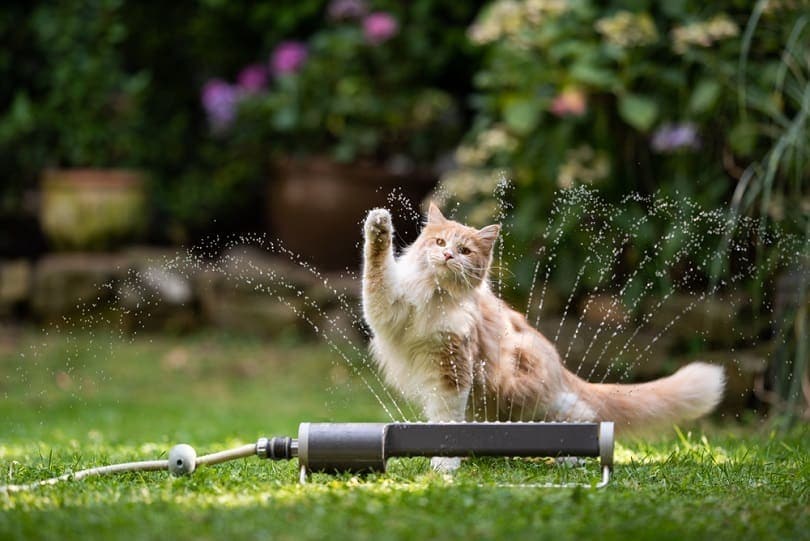
3. Many Maine Coons love water.
Many Maine Coons are quite fond of the water. It isn’t odd for them to enjoy playing in a small swimming pool or even the sink. Early introduction to water is likely a big factor in whether they like it as adults.
Conclusion
Maine Coons were once considered rare and only existed in the northern U.S.A. However, they are increasingly becoming more popular and are known as one of the most common long-haired cats in North America.
They are well-known as gentle giants and get along with other pets well. While they are affectionate, they prefer plenty of playtime. Generally, these cats are not lap cats. Instead, they spend much of their time running around and playing with their people. Most are devoted to their owners without being overly dependent. They will happily spend their day running around and playing with toys, looking forward to when their humans come home.
While they have a long coat, they usually need grooming a few times a week. This prevents their coat from becoming matted and helps their fur stay clean. Besides this, these cats are quite low-maintenance, especially if you provide them with plenty of exercise opportunities indoors.
- Related Read: 10 Best Cat Collars – Reviews & Top Picks
Featured Image Credit: Hepper