Japanese Bobtail Cat Breed: Info, Pictures, Care, Traits & Facts

Updated on

| Height | 8–9 inches |
| Weight | 6–10 pounds |
| Lifespan | 9–15 years |
| Colors | Any |
| Suitable for | Active families, travelers, retired people, elderly people, feline agility |
| Temperament | Energetic, playful, endearing, joyful |
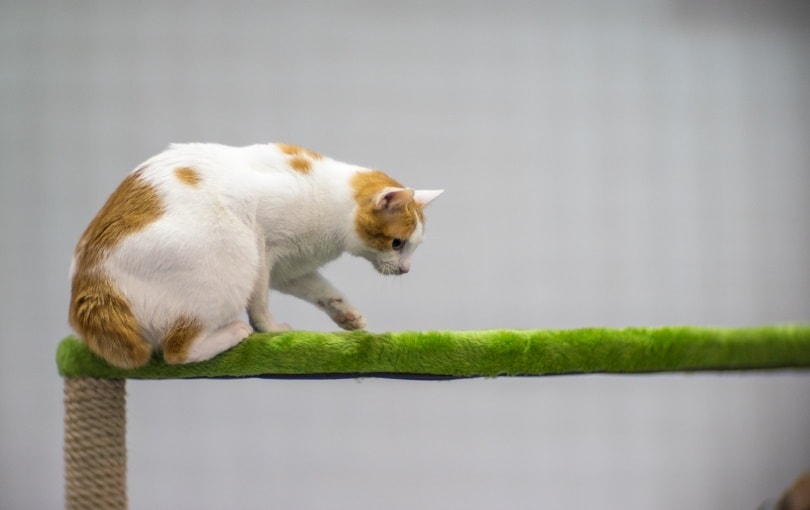
The Japanese Bobtail is named for its bobbed tail, but this tail is shorter than many other bobbed cat tails. This tail is more rabbit-like than a cat! In fact, the breed standard calls for the tail to be 3 inches or shorter. However, no two Japanese Bobtail tails are the same, much like our fingerprints, so each is unique to the individual cat.
This breed is one of the oldest naturally occurring cat breeds in existence, which means they bred themselves with little to no intervention from humans. This breed has been kept as a pet for at least 1,000 years in parts of Asia. Old as the breed may be, though, this breed wasn’t introduced to the United States until 1968. This athletic cat is adored by many for its exuberance and zest for life.
Keep reading to learn more about the phenomenal Japanese Bobtail cat.

Japanese Bobtail Kittens
If you’re purchasing a kitten from a breeder, the cost will vary based on the pedigree of the parents and the quality of the kitten. If you’re lucky enough to stumble across one of these kittens through a rescue or shelter, you’ll have to pay a low adoption fee.
These kitties are a great option for adventurous families, seniors, and anyone looking for a playful and loyal cat. These fun cats are intelligent and they’ll be easily trained to learn tricks.
3 Little-Known Facts About the Japanese Bobtail Cat
1. They’re born with bobbed tails.
Not only are the bobbed tails genetic, but the gene that causes it is a dominant gene and is established in the breed. This means that if you breed a Japanese Bobtail to another Japanese Bobtail, you’ll get kittens with bobbed tails. The kittens are always born with bobbed tails and should not be born with full tails or absent tails, with the exception of genetic abnormalities and deformities.
According to the breed standard, the tail must have kinks, curves, angles, or some combination of these things.
2. They’re ahead of the curve.
The Japanese Bobtail is such a high-energy cat that they can’t contain themselves longer than absolutely necessary. This breed is known for setting the curve by becoming active at a younger age than most other kittens. They also begin walking earlier, which means they begin playing earlier as well. As an added bonus, Japanese Bobtail kittens tend to be exceptionally healthy.
3. They might not be Japanese.
It was long believed that the Japanese Bobtail originated in Japan and branched out from there when the silk trade exploded. However, a study in 2008 indicated this may not be the case. Genetic testing showed that Japanese Bobtails share few genetic markers with other cats that are known to be native to Japan.
The explanation for this finding is that either these cats were not originally native to Japan or that this breed has been so “westernized” that it no longer looks genetically similar to other cats from its homeland. Either way, we do know that these cats have been in Japan for more than a few hundred years.
Temperament & Intelligence of the Japanese Bobtail Cat
Are These Cats Good for Families?
The Japanese Bobtail can be a great family pet. Although they are very active, they also tend to be gentle and loving. They enjoy playing games and socializing with people, so they are usually a great fit for homes with children. As always, children should be taught how to properly respect the cat and its boundaries when interacting with it.
On the other side of this, this breed is happy to sit on the couch with you and nap while you watch TV or work on your computer. Although high energy, they aren’t just “go go go” all the time. They appreciate downtime as much as anyone but may still expect games and adventures when you get back up.
Does This Breed Get Along with Other Pets?
This is typically a great breed to keep with other pets, especially cats and dogs. They are social and playful, often enjoying a furry playmate. Their patient, gentle nature makes them a good mentor for a new kitten. However, precautions should be taken around small pets. The Japanese Bobtail is an adept hunter, and its agility makes it a danger to small pets.
This even goes for birds, which Japanese Bobtails have been known to catch mid-air.
Things to Know When Owning a Japanese Bobtail Cat
Food & Diet Requirements 🐡
What you feed and how much you feed your cat is variable based on the cat’s age, weight, optimal weight, and activity level. A high-quality cat food is a must, and many vets recommend feeding a diet that includes wet food since this can help your cat stay hydrated. If you have a highly active cat, like a cat that participates in feline agility or goes for a daily walk, it may have a higher caloric need every day than a lower energy or older cat.
Your vet or a veterinary nutritionist are a great place to start when choosing a food and knowing how much to feed your cat.
Exercise 🐈
This breed will require exercise every day. Bored cats may become anxious or get underfoot in an attempt to be played with, so make sure to find entertaining ways for your cat to exercise. Wall-mounted cat furniture and scratchers are a fun addition to your home that can help keep your cat fit. Teaser toys, electronic toys, and cat puzzles are great ways to exercise your cat physically and mentally. If your cat is harness-trained, then you can even take them for a walk or hike.
Training 🧶
The Japanese Bobtail is a highly trainable breed of cat. They are intelligent and excited to participate in activities, like performing tricks and doing feline agility. Treats and other positive reinforcement techniques often work well. Harness training is appropriate for this breed since these cats often appreciate adventuring outside the house. Harness training should be done slowly and with lots of positive reinforcement as it does take time for most cats to adjust to wearing the harness.
Grooming ✂️
This breed has normal grooming requirements, so you won’t have to do anything too crazy. Regular brushing will help distribute oils from the skin across the coat, giving it a shiny, healthy appearance. It will also remove loose hair, reducing the shedding that occurs in your home. They are not prone to mats or tangles, so visits to the groomer will likely be extremely rare.
Health and Conditions 🏥
- Hypothyroidism
- Kidney disease
- Diabetes
- Obesity
- None
Male vs Female
The most notable differences between male and female cats are the hormonal differences between the sexes. This is especially true of intact cats. Intact males and females in heat are prone to marking in inappropriate places in the home. Males in general are larger than females, with male Japanese Bobtails reaching about 8–10 pounds and females reaching 6–8 pounds.
Males are more likely to be loving, cuddly, and tolerant of other pets in the home. Females are more likely to be independent homebodies with more vocal tendencies than males. In this breed specifically, though, you are unlikely to end up with an overly independent cat.
Final Thoughts
The Japanese Bobtail is a lovely breed of cat both in appearance and personality. They are adored by the people who keep them, and they are well-suited to many types of homes. These cats can provide companionship to empty nesters and elderly people who live alone, but they are equally as happy to play games, learn new tricks and skills, and go on adventures. In the world of cats, the Japanese Bobtail is unusual in its adaptability and comfort level with travel and other potentially stressful situations.
If you’re looking for an active, athletic cat for your home, the Japanese Bobtail may be exactly what you’re hoping to find. Make sure to thoroughly vet any breeders before bringing a kitten home to ensure you are not supporting unscrupulous breeding practices. If you’re lucky, you’ll find a breed-specific rescue near you or a Japanese Bobtail in a shelter, waiting for you to take it home.
See also:
- Do Shiba Inus Get Along With Cats? Breed Temperament Exposed
- Do You Treat Your Pets Like Kids? The Fur Baby Phenomenon
Featured Image Credit: slowmotiongli, Shutterstock