Himalayan Cat Breed: Info, Pictures, Care, Traits & Facts

Updated on

| Height: | Medium to large |
| Weight: | 7–12+ pounds |
| Lifespan: | 11–15+ years |
| Colors: | Color pointed: red, blue, cream, seal, lilac, chocolate |
| Suitable for: | Individuals, families, quiet households |
| Temperament: | Gentle, calm, quiet, easygoing, affectionate, friendly |
The beautiful, fluffy Himalayan is a mix of the Persian and the Siamese breeds, which shouldn’t come as any surprise, given their level of fluffiness and coloring. The origins of Himalayan cats (Himmies) were in 1931 in the U.S. and continued during the 1950s in England and Canada. These cats certainly have interesting beginnings!
Himmies are medium to large, although their copious amounts of fur can undoubtedly give the impression of them being larger than they actually are. They have flat faces with enormous round blue eyes and come in pointed colors, which include cream, blue, red, chocolate, lilac, seal, and blue cream. They also come in several pointed patterns, such as tortoiseshell, solid, bicolor, tricolor, tabby, lynx, shaded, and smoke.

Himalayan Kittens
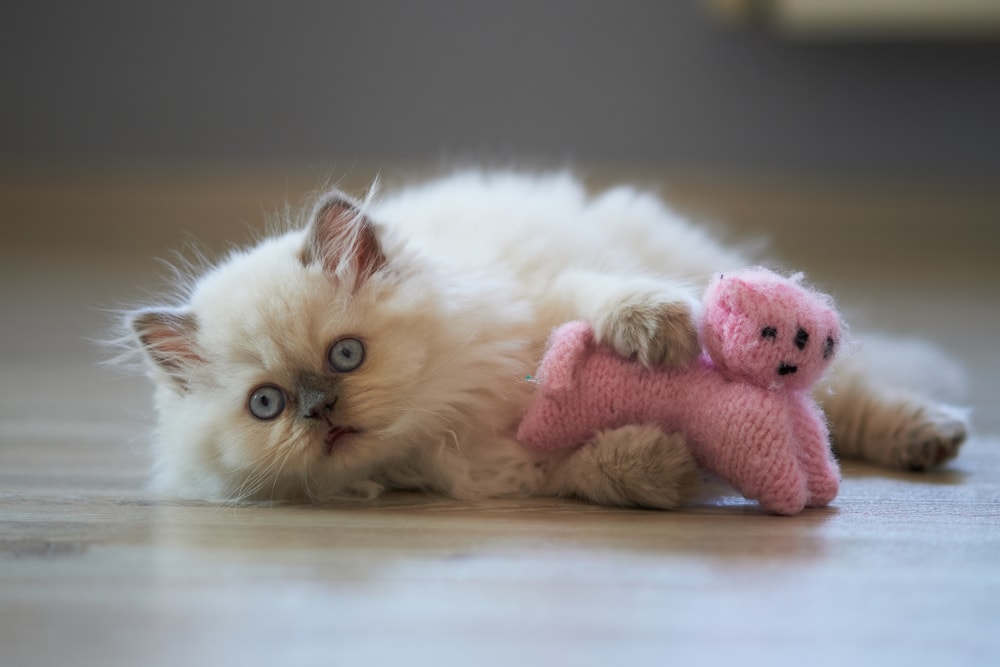
Himalayans are laidback cats that aren’t overly energetic, and while they are generally healthy, they are prone to several health concerns. They have an average lifespan, depending on the cat, and while they aren’t that trainable, they are friendly cats.

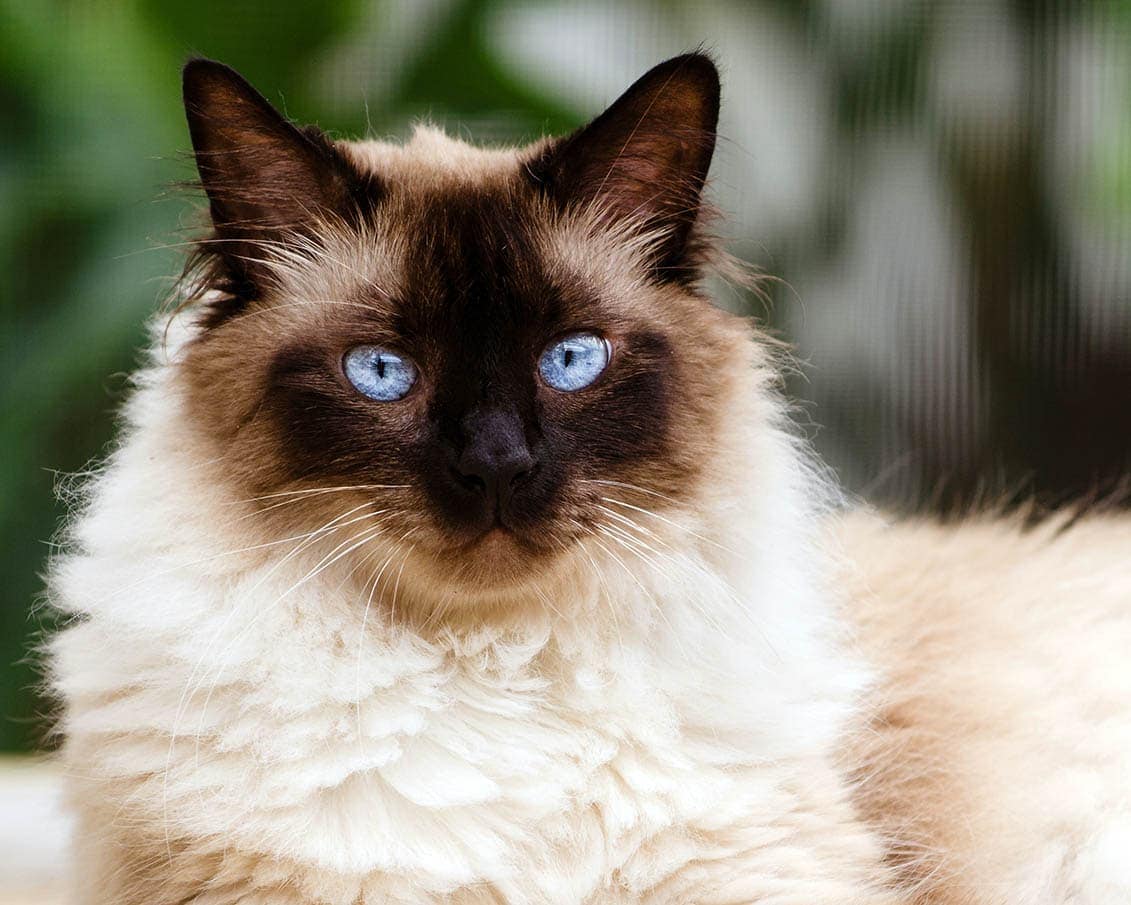
Temperament & Intelligence of the Himalayan
Himalayans are sweet, friendly, and loving cats that bond quite closely with their families. They are also calm and gentle and generally do best in quieter households. They are picky about whom they want to spend most of their time with.
They are intelligent cats and due to their Siamese background, will enjoy having long conversations with you. They love attention, but they won’t go out of their way to pester you for it.
Are These Cats Good for Families? 👪
They do make wonderful family cats but not in a big noisy home full of young children. They do better in calmer households, so older children would be ideal. Always teach your children when it’s okay to play with the cat and when they need to let your Himmie sleep.
Does This Breed Get Along With Other Pets?
Himalayans do just fine with other pets, as long as they are not too boisterous. Himmies will enjoy cuddling up with another cat or even a dog but won’t spend too much time playing with another animal. Just make sure the other cat or dog also tends to be calm, or at least give your Himalayan a place to escape to if things become overwhelming.
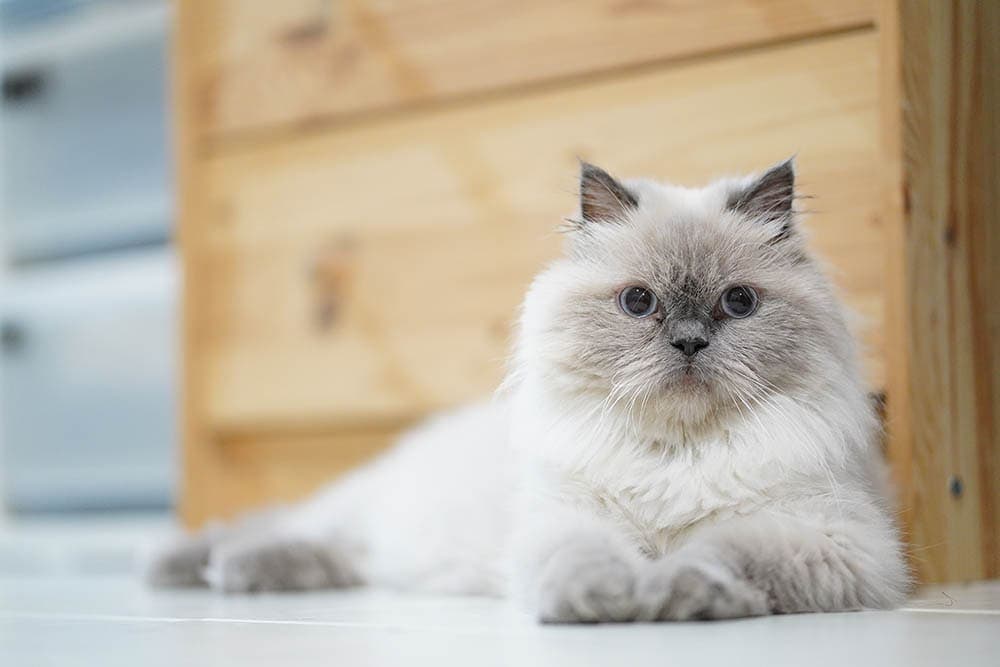
Things to Know When Owning a Himalayan
It’s important to be prepared to own any pet before you bring one home. The Himalayan cat is no exception. Here is more information that can help you understand part of what goes into owning one of these beautiful cats.
Food & Diet Requirements 🐡
There are a few considerations that you need to make regarding the Himalayan cat’s diet. You might be surprised to learn that there is cat food designed for Persians, which will work just as well for a Himalayan. They are prone to hairballs, and their flat faces can make eating more of a challenge, which food like this can help with.
You should also add canned food for the extra moisture content. As cats start to age, they are prone to kidney disease, and canned food, as well as a cat fountain, can help with this. You should also consider placing your cat’s water source at a minimum of 3 feet away from their food. This will help encourage them to drink more.
Since Himmies are not that energetic, you need to be aware of their propensity for weight gain, so keep an eye on food and treat intake. Speak with your vet about any concerns that you may have.
Exercise 🐈
Himalayans are not big fans of exercise. They spend most of their time napping, with the occasional burst of activity. They do play, just not that often, and you should keep in mind that they generally do better as indoor cats only.
You’ll want to make a point of playing with your Himmie every day to help your cat avoid weight gain. Put up cat shelves and a cat tree, and ensure that they have plenty of enrichment and interactive toys.
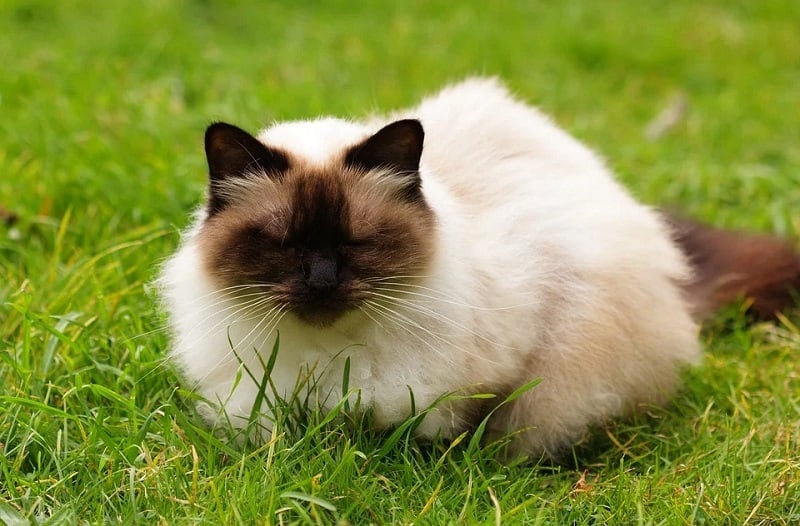
Training 🧶
Himalayans can be trained because they are smart enough, but whether they want to bother with training is another story. Short training sessions work best, and you can train your Himalayan to walk on a harness and leash, but they’re perfectly happy to be indoor cats.
Grooming ✂️
Owning a Himalayan also means maintaining that coat. They have thick double coats of fur that need to be brushed every day. They are also prone to eye discharge, so you’ll need to regularly clean the tearstains from their face.
You’ll want to trim your cat’s nails about every 3–4 weeks, and you’ll need to invest in a cat scratcher. Cats should have their teeth brushed regularly but if it doesn’t go well, consider giving your Himmie dental treats instead.
Health and Conditions 🏥
The Himalayan is prone to several health conditions, so you’ll want to speak to your breeder about any questions that you have regarding your cat’s health.
Himalayans are also prone to watery eyes and are sensitive to heat.
Male vs Female
One of the main differences between male and female Himalayans is size. The males tend to be a little larger and heavier than the females.
Spaying or neutering your Himmie will help prevent unwanted behaviors like spraying and running away (or constantly trying to run away). Spaying will cost extra.
If you’re trying to decide between a male and a female because you’re looking for a specific temperament, you’re much better off just meeting the kittens (or adults) and going from there.
How well you connect with the cat is what you should go by when making your decision. In the long run, how the kitten is raised in your home will determine your Himmie’s personality.
3 Little-Known Facts About the Himalayan
1. Himalayan cats are considered to be Persians by some organizations.
The Himalayan is thought to be a separate and distinct breed by associations such as TICA and the American Cat Fanciers Association. However, the Cat Fanciers Association believes that the Himalayan is a variety of Persian.
2. A Himalayan cat has broken two world records.
Colonel Meow was a Himalayan from Los Angeles and broke the record in 2014 for having the world’s longest fur (9 inches, actually). Tinker Toy was a Himalayan that broke the record for the world’s smallest cat. He was only 2.75 inches tall and 7.5 inches long and came from Illinois.
3. There aren’t many differences between Himalayan and Persian cats.
Temperament, size, and energy levels are all elements that these two breeds have in common. The only truly noticeable difference between the Himalayan and the Persian is eye and coat color. Himmies always have blue eyes, and they are always color-pointed, whereas Persians are not. Of course, this depends on whether you consider Himalayans to be a variety of Persian.
Conclusion
Finding a Himalayan won’t be difficult, given how popular these cats are. You can search through social media, and you should be able to locate a breeder close to your location. Just remember to be careful when choosing a breeder. They are usually registered through TICA, and you should ask to speak to the other owners who took one of the breeder’s cats home.
Don’t forget to consider adoption. If you don’t find a Himmie at your local rescue group, you might be able to find one through breed-specific organizations, like the Persian & Himalayan Cat Rescue based out of Northern California.
The sweet and gentle Himmie will be the perfect pet if you’re looking for a cat that wants to cuddle and generally hang out with you. If a calm and affectionate cat sounds like the perfect fit for you, take a Himalayan home!
Featured Image Credit: Anne Richard, Shutterstock