Havana Brown Cat Breed: Info, Pictures, Temperament & Traits

Updated on

| Height: | 9–11 inches |
| Weight: | 6–10 pounds |
| Lifespan: | 8–13 years |
| Colors: | Reddish brown |
| Suitable for: | Those living in apartments and/or multi-pet households, and those with plenty of time to spend with their cat |
| Temperament: | Playful, independent, loyal, curious, and affectionate |
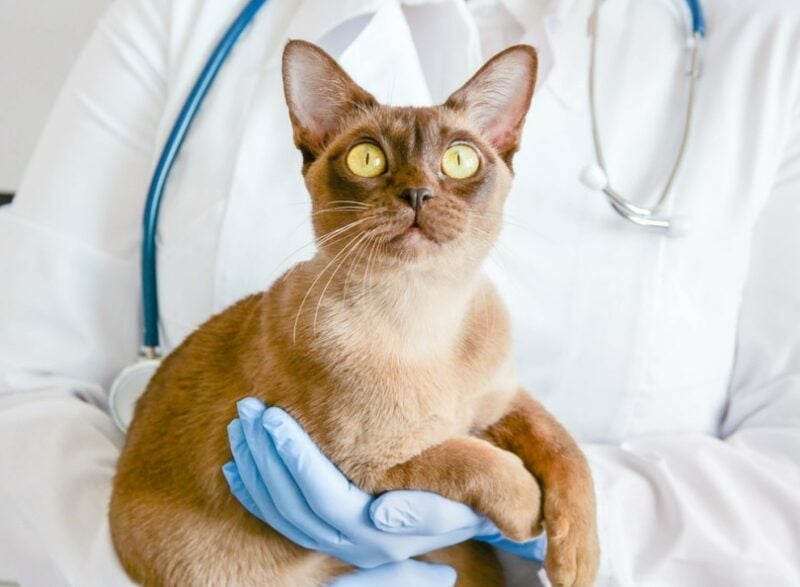
While the Havana Brown Cat might be one of the rarest cats in the world, if you manage to get one, they’re also among the most adorable pets that you can bring into your home.
These fantastic little balls of fur are extremely small but fit into just about any lifestyle, doing well with other pets and animals of all sizes. But how much can you expect to spend on a Havana Brown Kitten, and what do you need to know to care for them?
We break it all down for you here. By the end, you’ll be ready to start the arduous journey of trying to track one down!
 Havana Brown Kittens
 Havana Brown Kittens
Considering how rare the Havana Brown Cat is, the price of a kitten isn’t nearly as expensive as you might think. If you’re willing to adopt a mixed-breed Havana Brown Cat, you don’t have to worry about the price at all. Most shelters carry variations and mixed breeds, and you can find them for a low adoption fee.
Since most of the time, those costs go toward covering medical procedures like spaying/neutering and other routine checkups, it’s not uncommon to have the real costs associated with owning one of these cats wind up being close to nothing.
If you need purebred, you’ll need to do your homework to track one down, and you’ll need to open up your wallet. But if you’re not that picky, there are plenty of shelter cats that need a loving home!
Temperament & Intelligence of the Havana Brown Cat
While the Havana Brown Cat has an independent streak, they’re still an extremely playful cat that thrives on human interactions. Don’t take their slightly aloof personality as a sign that they don’t want you around.
That said, they will bond with one owner far more than anyone else in the family. So, if you live in a house where everyone needs to feel the love equally from the furry companion to avoid jealousy, a Havana Brown Cat isn’t what you’re looking for.
Still, they’re loyal and affectionate and can find ways to play by themselves and with their owners. With such eccentric personalities, it’s no wonder that they’re a joy to have around.
Are These Cats Good for Families? 👪
As long as your family understands that the Havana Brown Cat bonds with one person more than the others, they’re a great family pet. They will still love the other family members.
While they might be small, they’re intelligent enough to avoid wandering hands and stumbling toddlers, which means you don’t need to worry as much about a smaller child falling on the cat and injuring them.
This is a big difference between small cats and small dogs. Small cats can escape and find ways to get away; small dogs sometimes jump straight into the fray!
Does This Breed Get Along With Other Pets?
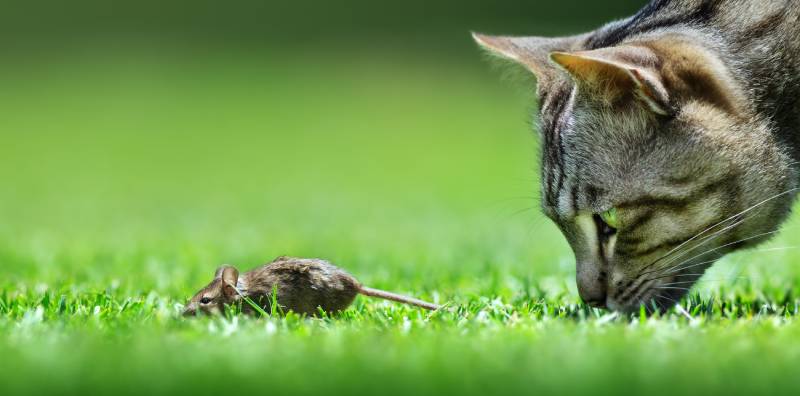
If you already have a few dogs or cats in your home, adding a Havana Brown Cat shouldn’t present any problems. Just keep in mind that their friendly temperament around other pets typically doesn’t extend to smaller pets, like rodents, guinea pigs, reptiles, amphibians, or fish.
Cats have natural predator instincts, and these small pets are simply irresistible. The good news is that you can usually take the proper precautions to keep them separated from your cat, and you won’t have any problems!
Things to Know When Owning a Havana Brown Cat
 Things to Know When Owning a Havana Brown Cat
Before you head out to track down and purchase a Havana Brown Cat, there are a few basic care requirements that you should be aware of.
While they’re not that unique compared to other cats in terms of care, the last thing that you want is to spend all this time tracking down a Havana Brown Cat only to realize that you don’t know everything that you need to do to take care of them.
Food & Diet Requirements 🐡
The Havana Brown Cat is extremely small, even by cat standards. The smallest Havana Brown Cats weigh in at 6 pounds, and even the largest ones out there barely crack the 10-pound threshold.
This means you can expect to feed a Havana Brown Cat anywhere from ¼ to ½ cup of high-quality kibble each day. You can supplement their diet with treats and the occasional wet food, but as long as you go with a complete cat food, they don’t need those things.
With such a small cat, there’s no reason to skimp on the quality of their food. If you buy it in bulk and store it properly, you can get your monthly cat food bill down to $5–$10 a month.
Exercise 🐈
While the Brown Havana Cat isn’t the most active cat breed out there, that doesn’t mean you don’t need to keep them moving from time to time. While you don’t need to take them out for walks like you would a dog, that doesn’t mean you can sit back and let them wander aimlessly around the house.
Using interactive toys is one of the best ways to ensure that your cat is getting the exercise they need. Laser pointers enable you to be a part of the process, but if you want something more passive, there are plenty of interactive toys that can stimulate your cat on their own.
Just ensure that your cat is playing with them and staying moving. Another great way to help your cat get enough exercise is to simply get another cat. They’ll love playing together, and when they’re playing, they’re exercising!
Training 🧶
While you’re likely not going to train your cat to complete a wide array of tricks, it’s not too hard to train them to do what they need to, such as scratching at the scratch post and using the litter box.
The Havana Brown Cat is an extremely intelligent cat, and if they decide that they want to do something, they have no problem doing it. The problem is that like most cats, they’re fiercely independent and stubborn.
So, while litterbox training is easy, training them to do tricks is one of the most daunting tasks out there.
Grooming ✂️
There are few furry pets with as easy grooming requirements as the Havana Brown Cat. They’re an extremely low-shedding cat, and as such, you only need to brush them about once a week.
From there, you need to keep an eye on their nails if they don’t use a scratch post and to brush their teeth a few times a week. While it can be challenging to brush your cat’s teeth depending on their temperament, it’s essential to help prevent future dental problems.
Health and Conditions 🏥
There aren’t many Havana Brown Cats out there, so there’s plenty of inbreeding going on due to the stark lack of genetic diversity. This is a major factor in health problems in any species, and the Havana Brown Cat is no different.
If you’re getting a purebred Havana Brown Cat, there’s an extremely high chance that they will develop various health problems. If you start to notice any of the following signs or problems arising in your cat, you need to take them to a vet as soon as possible.
- Parasites
- Allergies
- Diabetes
- Heart disease
- Arterial thromboembolism
- Hemophilia
- Renal failure
Male vs. Female
There aren’t many differences between male and female Havana Brown Cats, but if you get a purebred, there are two factors that you should keep an eye out for. First, male cats tend to be a bit larger. So, if you’re looking for a teeny 6-pound Havana Brown Cat, you’ll have better luck with a female.
Second, males tend to need a little more attention compared to females. While both males and females love companionship, you’ll find that males will rub up against you more often and demand more attention. If you want a cat that’s always prying for your attention, get a male. If you want one that’s a little more independent, get a female.
 3 Little-Known Facts About the Havana Brown
 3 Little-Known Facts About the Havana Brown
1. There Are Fewer Than 1,000 Havana Brown Cats Left
More and more people have started crossbreeding Havana Brown Cats with other breeds, so hybrid mixes are about all that you can find. If you’re looking for a purebred Havana Brown Cat, you’ll have to track down one of a handful of breeders left in the world.
With fewer than 1,000 Havana Brown Cats left, the genetic diversity is more than a little lacking, and you might not be able to find any of these rare cats in the future.
2. The Havana Brown Cat Is the Only Cat With Brown Whiskers
Not only is the Havana Brown Cat one of the rarest cats when it comes to the color of their coat, but they’re also the only cat with brown whiskers!
They’re brown through and through, which is rare enough before you take the whiskers into account. Once you do that, you can’t find a more brown cat out there!
3. The Havana Brown Cat Is One of the Only All-Brown Cats
Brown is a color that often gets a bit overlooked. It’s a common color for dogs, for human hair, and about a hundred other things. But try to think about the last time that you saw an all-brown cat. Chances are that you’ve never seen one.
The Havana Brown Cat is one of the only all-brown cats out there. Considering that there are fewer than 1,000 left, they’re the rarest cats on the planet.
Keep in mind that we’re talking about an all-brown cat with no markings. Having cats with splashes of brown mixed in with other colors and markings isn’t nearly as rare.
Final Thoughts
While the purebred Havana Brown Cat is an extremely rare find, don’t let that stop you from getting a crossbreed. They possess many of the same delightful characteristics as a purebred, but they’re much easier to find and don’t come with a high price tag.
But if you have your heart set on a purebred, start your search now and expect it to take a while. There aren’t many left, and finding a breeder who’s willing to work with you can be even more challenging. Just ensure that you get eyes on your kitten before you send any money!
Related Reads:
Featured Image Credit: Zoonar GmbH, Shutterstock