Don Sphynx Cat Breed: Info, Pictures, Care, Traits & Facts

Updated on

| Height: | 8–12 inches |
| Weight: | 6–14 pounds |
| Lifespan: | 12–15 years |
| Colors: | Hairless with a variety of skin colors and patterns |
| Suitable for: | Families with children, seniors, multi-pet households |
| Temperament: | Affectionate, intelligent, bold, confident, loving, social |
The Don Sphynx is a hairless cat that’s also known as the Russian Hairless or the Donskoy Cat. They are less common than the Sphynx, also called the Canadian Hairless. The Don Sphynx experiences hair loss due to a dominant gene mutation, while the Sphynx’s baldness is due to a recessive mutation.
It all started in 1987, when a homeless kitten was taken in by a woman in the Russian city of Rostov-on-Don1. This kitten, named Varvara, began to lose her hair. She eventually had a litter of hairless kittens that became the foundation of the Donskoy breed.
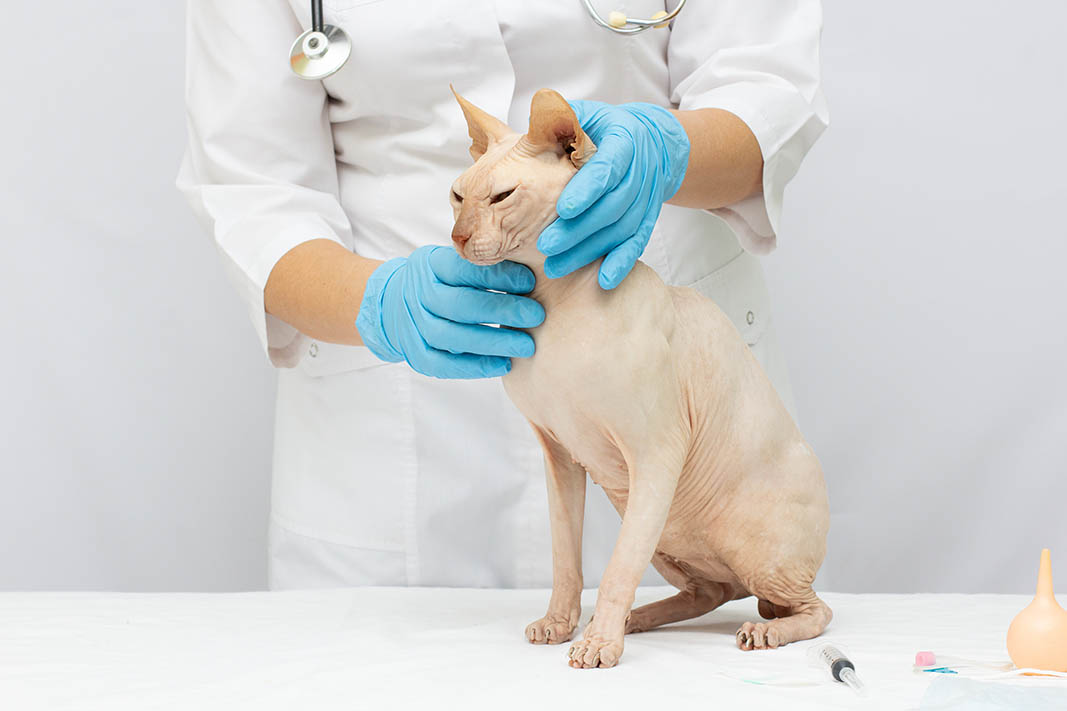
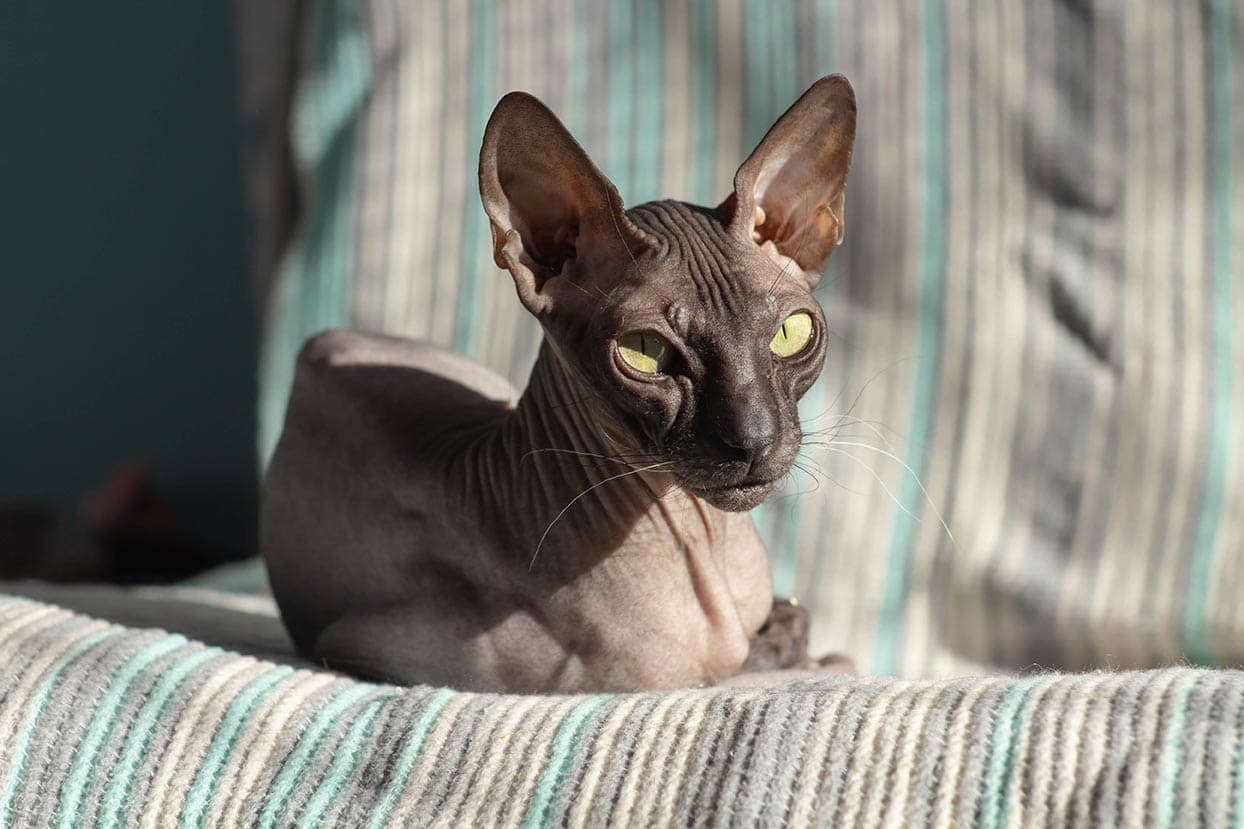
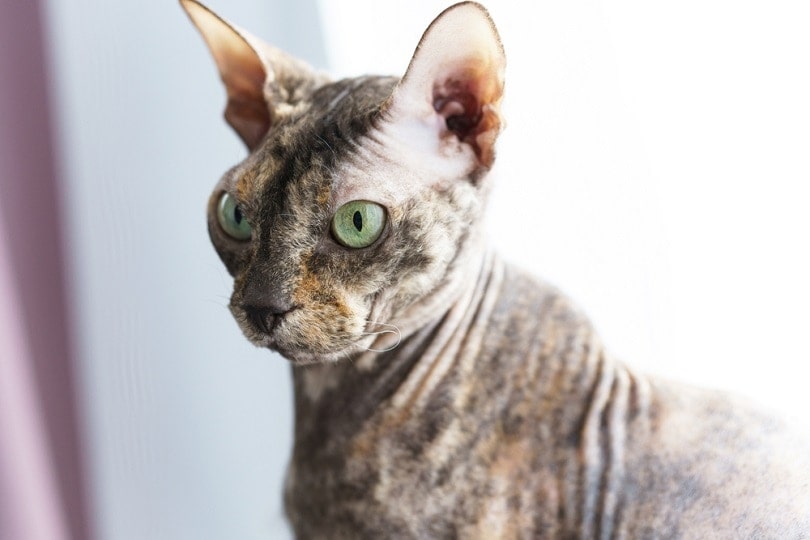
While hairless cats were initially thought to be sick, they’re quite healthy and make loving companions. Their wrinkled skin resembles and feels like human skin. These muscular cats have large ears, almond-shaped eyes, and webbed toes. They can have skin of various colors and textures.
- Rubber Bald: Completely bald from birth
- Flocked: Looks hairless but feels like flannel
- Velour: Born with a bald spot on the head; hair may remain on the face and tail
- Brush: Soft or wiry hair with patches of baldness

Don Sphynx Kittens

Since the Don Sphynx cat is rarer than the Sphynx, they have hefty price tags, especially if you get a kitten from a reputable breeder. The breeders must be knowledgeable and experienced with Don Sphynx cats to successfully breed them.
If you come across Don Sphynx kittens for a low price, be careful when dealing with an inexperienced breeder. It’s best to research the breeder’s history and reputation, no matter the cost. If you decide to pursue purchasing a kitten, ask to see their living area at the breeder facility or home and meet the parent cats.
Some people have accidental litters and want to sell the kittens to make money. Others will sell kittens, claiming that they’re Don Sphynx cats when they’re mixed breeds. While all kittens deserve loving homes, if you have your heart set on this specific breed, purchase a kitten from an established breeder.
If you don’t mind adopting an older cat or a Don Sphynx mix, check out your local shelters or rescues. Sphynx-specific and exotic cat rescues also exist, where you can find rarer breeds. The cost of adopting a cat at a shelter is significantly cheaper than the price through a breeder. Your adoption fee will also cover the kitten’s vaccinations, microchipping, and spay or neuter surgery. Your money goes toward helping more cats, and you save a life at the same time.
 3 Little-Known Facts About the Don Sphynx Cat
1. They Require More Grooming Than a Cat With fur.
You may think that a bald cat would be easy to care for since there’s no shedding! But while Don Sphynx cats don’t require brushing, they need help caring for their skin. They need daily skin wipe-downs and require weekly baths.
2. They Need More Protection From the Elements.
Since the Don Sphynx is hairless, their skin is always exposed. They are susceptible to sunburn, so they can’t spend too much time in direct sunlight. Don’t put regular sunscreen on your cat. Many sunscreens are toxic to cats, even a few of the ones specifically made for animals. Talk to your vet about suitable sunscreens or limit your cat’s time in the sun.
Don Sphynxes are sensitive to hot and cold weather, needing sweaters in the winter to keep them warm. They may also eat more in the winter to maintain their body temperature. This can also be true in the summer if your air conditioner is too cold for them.
3. Since They’re Rare, They’re Often Stolen.
As with any exotic breed, it’s best not to leave them alone outside. Not only should they not be exposed to the elements, but they also run a high risk of being stolen. Their friendly and social nature doesn’t help because they are willing to approach people.

Temperament & Intelligence of the Don Sphynx Cat
Don Sphynx cats are intelligent, friendly, and social. They enjoy being the center of attention and are sometimes compared to dogs due to their level of loyalty. They love playing games like fetch and even hide and seek! They are not cats that do well if left alone for long periods.
While other breeds are independent and do fine alone in the house, the Don Sphynx demands attention from people. Don Sphynxes can be trained to respond to voice commands. Their intelligence makes learning easy for them, and they are always happy to participate in an activity with people.
Are These Cats Good for Families? 👪
Don Sphynxes are good cats for families who want an animal that is the center of attention. This won’t be a cat that is happy staying in the background. The Don Sphynx will be front and center, always assuming you want to see and interact with them. They also require a higher level of care than a typical housecat, so families must have the time to dedicate to keeping this breed healthy and happy.
Does This Breed Get Along With Other Pets?
The Don Sphynx gets along with other pets but may not always be friendly with other cats. They can do well in a multi-pet household, especially if they entered it as kittens.
Things to Know When Owning a Don Sphynx Cat
Food & Diet Requirements 🐡
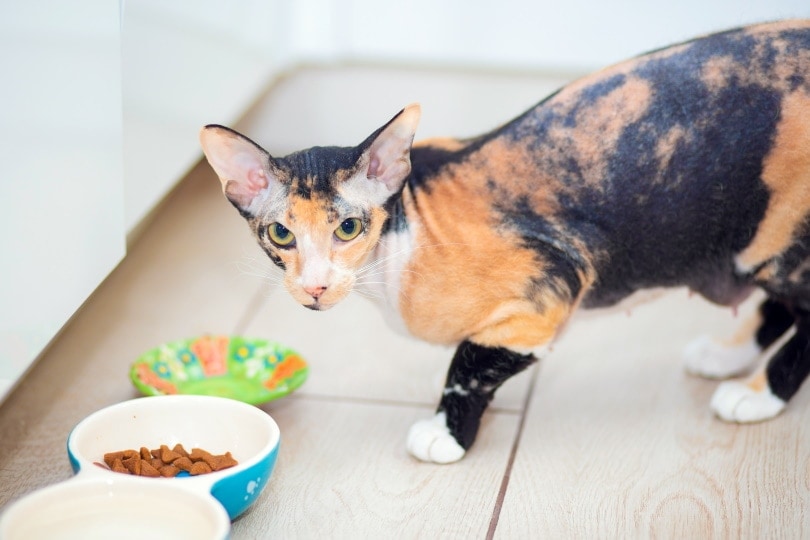
Like all cats, a Don Sphynx cat is an obligate carnivore, which means they require animal protein in their diet. While their dietary needs don’t differ from any other housecat’s, they require healthy protein, fat, and fiber in their food. A high-quality kibble and protein-filled canned food will keep them healthy.
The Don Sphynx uses more energy in the winter to maintain their body temperature, and you may need to increase their portions when the temperature drops. If you’re unsure how much to feed your cat, always consult your veterinarian.
Kittens will also need more calories than adult cats and will eat more daily meals.
Exercise 🐈
Don Sphynxes need regular exercise to keep them entertained and maintain their weight. They love to play games of fetch and chase after toys. Puzzle toys are a fun way to keep your cat engaged and active. They get rewarded with a treat for solving a puzzle, so they work hard to succeed.
Laser pointers are great for making your cat run through the house. You can even train your cat to walk on a harness and leash, but make sure the harness fits snugly and the weather is suitable for your Don Sphynx.
Grooming ✂️
Don Sphynxes have different grooming needs than other cats because they have no hair. Their skin needs special attention. The cat’s body is covered in oil glands that leak. With no hair to absorb the oil, it winds up on whatever surface your cat has chosen to rest. This could be your couch, carpet, bed, or table. Wiping down your cat once a day will prevent an oil buildup on their skin.
Bathing once a week is also necessary to keep the skin moisturized and clean the oil off the skin. Bathing less than that could lead to excessive oil buildup. Bathing them too often could lead to dry skin that produces even more oil.
Regular nail clipping is important, and since they’re not likely to spend much time outside, you’ll need to clip them every 4 to 6 weeks. Cleaning your Don Sphynx’s ears will also become a regular task. Their large ears collect wav more easily than ears with hair. Once a week, carefully wipe the wax and debris from your cat’s ears to help them stay healthy and avoid infection.
Health and Conditions 🏥
Don Sphynxes are healthy overall but can be prone to conditions that arise due to their lack of hair. A healthy diet and fastidious grooming will be the best ways to prevent health issues.
- Gum disease
- Feline ectodermal dysplasia
- Dental issues
Male vs. Female
The personality of the Don Sphynx is similar in both males and females. Their care is also the same, regardless of sex. The only notable difference is the size. Males are larger and more muscular than females.
Your choice will come down to your personal preference. Females need to be spayed if you’re not breeding them to avoid heat cycles and possible health issues in the future. If you have a male, neutering is the healthiest option for them. It can also stop undesirable behavior, like spraying and territorial aggression.
Whichever you choose, you’ll be getting a lovable, active, and affectionate family member.
Conclusion
If you’re looking for a Don Sphynx kitten, you may have trouble finding one. If you find a breeder, the kittens are usually expensive. Make sure your breeder is responsible, knowledgeable, and willing to let you visit the property and animals.
Welcoming a Don Sphynx into your family will give you a loyal friend and companion for life. They require a bit more care in terms of grooming and body temperature regulation, so you’ll need to be sure you understand the commitment before taking on this responsibility.
If you have the time and love to offer a Don Sphynx, they will reward you with the same in return. Whether you choose a male or female, you’ll get a unique and beautiful cat with an endearing personality.
Featured Image Credit: borisenkoket, Shutterstock