Burmese Cat Breed: Info, Pictures, Care, Traits & Facts

Updated on

| Height: | 9–13 inches |
| Weight: | 8–12 pounds |
| Lifespan: | 20–25 years |
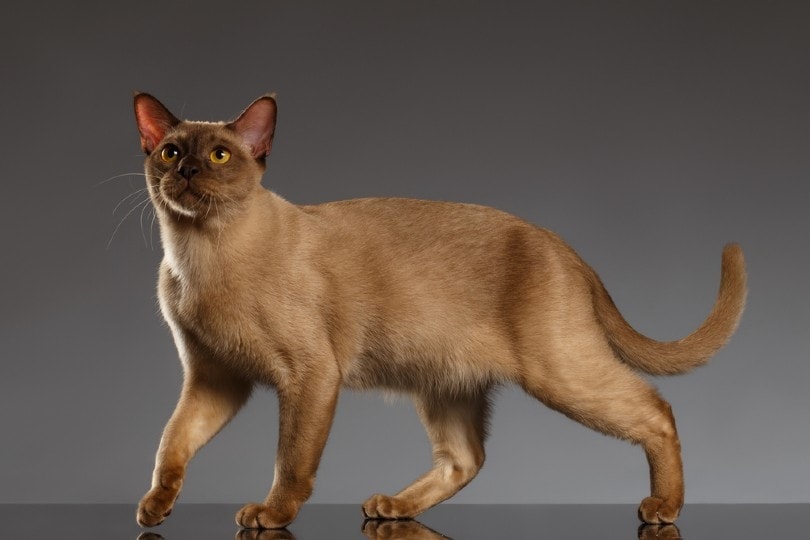
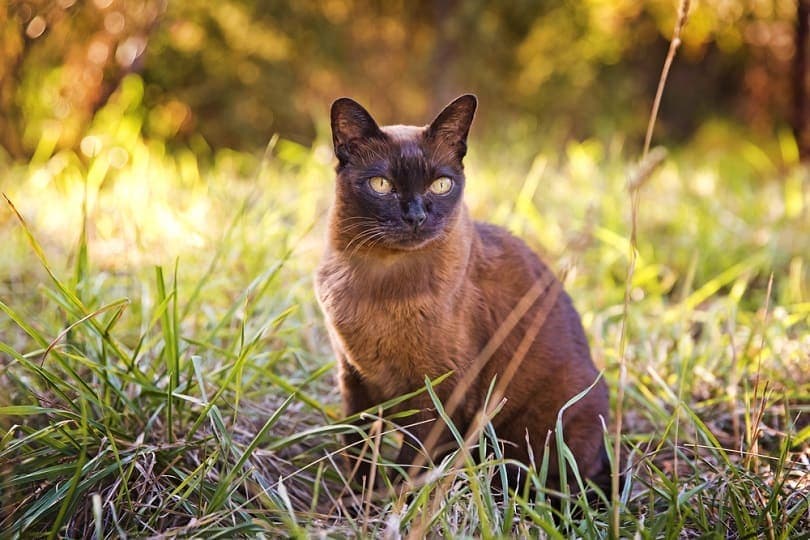
| Colors: | Brown, chocolate, blue, lilac, red, cream |
| Suitable for: | Laid-back and adaptable |
| Temperament: | Intelligent, affectionate, loyal, playful, gets along great with other pets |
Who says that cats can’t be loving and affectionate? Certainly not anyone with a Burmese cat! These cats are known for their playful demeanor and even get referred to as dog-like! Owning this breed gives you the convenience of a cat with the temperament of a pup, making them extremely popular pets.
Even better, they live an extremely long time and don’t take up much space, so if you’re looking for a long-lived pet and don’t have a huge house, a Burmese cat might be just what you’ve been looking for.
But is the Burmese cat right for your home, and what do you need to do to care for them? We break down everything that you need to know about this interesting and adorable breed here.

Burmese Cat Kittens
What’s the Price of Burmese Kittens?
If you’re looking to purchase a Burmese kitten, you’re likely going to spend more than you would for most other types of cats. Prices for a Burmese kitten start at $600, but it’s not rare to see them going for as much as $1,000.
If you’re using a higher-end breeder, those costs can skyrocket. Think $1,200 for a standard color and $2,500 for a show-quality kitten with a rarer color.
While Burmese kittens might be more expensive than many other kittens, considering that they can live for up to 25 years, it’s not a completely unreasonable price.
3 Little-Known Facts About Burmese Cat
1. They Like to Meow.
While the Burmese cat might not be as vocal as their Siamese cousins, they’re far from quiet cats. If you’re looking for a quiet cat that won’t make much noise, the Burmese cat isn’t for you. Expect a deep meow that you’ll hear throughout the day.
2. Burmese Cats All Descend From Wong Mau.
It’s rare that we can track down any species to a single parent, but that’s precisely what we can do with the Burmese cat. A sailor brought back a cat from Burma, named Wong Mau, and bred them with a seal-point Siamese, and the Burmese cat was born.
Every Burmese cat in the world today is a descendant of Wong Mau, making it one of the most well-tracked lineages in the pet world.
3. Burmese Cats Are Prone to Separation Anxiety.
Cats have a reputation for needing less time with their owner than dogs. With the Burmese cat, though, that’s simply not the case. They’re prone to separation anxiety and need to spend large amounts of time with you every day.
Ensure that you have plenty of time to devote to your Burmese cat before you adopt one.

Temperament & Intelligence of the Burmese Cat
The Burmese cat is an extremely intelligent, loyal, and playful cat. While they might not cuddle as much as some lap dogs, they’re far cuddlier than most cats. They also love to play and be the center of attention.
But while Burmese cats are playful and loving, you need to keep in mind that they need attention. If you don’t give them any, they can quickly turn ornery and participate in destructive boredom behaviors.
So, before you purchase a Burmese cat, ensure that you have enough time and attention to devote to them to keep them happy.
Finally, Burmese cats are incredibly trusting and warm up to people far quicker than most other cat breeds. You shouldn’t have to work hard to earn their affection, which means you can start bonding right away!
Are These Cats Good for Families? 👪
Burmese cats are great family cats. They get along with everyone in the family, regardless of age. Still, due to their smaller size, you should always supervise interactions with smaller kids.
Smaller kids can hurt your Burmese cat on accident, and to protect themselves, your Burmese cat might strike back. However, aggression is extremely rare in the breed, so the chances of you getting a mean Burmese cat is slim to none.
Does This Breed Get Along With Other Pets?
Burmese cats are extremely playful by nature, so as long as the other pets in your house enjoy playing too, you shouldn’t have any problems. However, this is typically only true for other cats, dogs, or larger pets.
Burmese cats still have predator instincts, so you need to keep them away from pet birds, fish, reptiles, rodents, or other small pets. But for large pets that your cat doesn’t view as prey, you shouldn’t have any issues with a Burmese cat.

Things to Know When Owning a Burmese Cat
Before you head out and purchase a Burmese cat, there are a few basic care requirements that you should be aware of. From their diet to potential health conditions, we break down everything that you need to know here.
Food & Diet Requirements 🐡
Due to their smaller size, a Burmese cat doesn’t need to eat a ton of food each day. Smaller Burmese cats are fine with a ½ cup of high-quality dry cat food each day, while a larger Burmese needs closer to ¾ cup of food.
You can also feel free to feed them wet foods and supplement with treats throughout the day. If you go with a high-quality food, you should be able to spend around $30 a month to feed your cat and give them everything that they need to thrive and stay healthy.
Exercise 🐈
Just because you’re not taking your cat out for walks doesn’t mean they don’t need exercise. You need to ensure that they have plenty of areas to climb, and you should actively play with them to help them meet their exercise needs.
Laser pointers are a great tool that gets your cat moving, but there are plenty of interactive cat toys that can do the trick too. Don’t be too shy to get on your cat’s level and play with them that way! Any way that you can get your cat moving is a great thing to keep them happy and healthy.
Training 🧶
While you’re likely never going to train your cat to do a bunch of cool tricks, when it comes to training them to do the basics, it’s relatively easy. Litterbox training with a Burmese cat is usually a breeze, as is getting them to stop scratching at things that they shouldn’t.
The best tool that you have is redirection and showing them where they’re supposed to exhibit certain behaviors. Don’t yell at them or make a big deal about accidents in the wrong part of the house or if they start to scratch at something that they shouldn’t.
This can make them feel like they have to hide the behavior from you. Instead of seeking out the right area to do it, they’ll just try to find a spot that you can’t see them and do it, anyway.
Grooming ✂️
While the Burmese cat doesn’t have the most demanding grooming schedule, there are a few things that you need to keep up with. Start by brushing them weekly. This will help keep shedding under control, keep hairballs at bay, and keep their fur from matting.
Furthermore, brush their teeth a few times a week to keep tartar from building up and preserve good oral hygiene. While it might be a little frustrating to brush your feline friend’s teeth, it can end up saving you thousands of dollars in future vet bills.
Health and Conditions 🏥
While the Burmese cat breed is relatively healthy, that doesn’t mean there aren’t a few concerns that you need to look out for. Always check a breeder’s references, take a look at the parent’s health history, and get a guarantee on your kitten’s health.
If your Burmese cat starts to display any of these symptoms, take them to a vet as soon as possible to see what you can do.
- Obesity
- Pica
- Parasites
- Diabetes mellitus
- Hypokalaemic polymyopathy
- Feline orofacial pain syndrome
Male vs. Female
While there are not that many differences between a male and a female Burmese cat, there are a few that you should be aware of. First, male cats tend to get much larger than females.
This means if you’re getting a purebred Burmese cat, a male is more likely to push 13 inches in height and 12 pounds in weight, while a female is more likely to be 9 inches tall and weigh 8 pounds.
Another difference often comes down to their temperament. Males tend to be friendly and need more attention than females. While a female Burmese should still be friendly, they likely won’t want as many cuddles or need you around quite as much.
Of course, your cat’s individual personality has a part to play in this too, so don’t be too surprised if your cat doesn’t fit their stereotypical sex personality.
Finally, until you neuter a male cat, they are far more likely to spray to mark their territory and try to get out and find a mate. Once you neuter them, this usually isn’t a concern.
Final Thoughts
If you’re looking for a cuddly cat with a long lifespan, the Burmese cat can be an excellent choice for your home. But if you’re looking for a prototypical cat that sleeps all day and only wants attention every now and then, the Burmese cat isn’t what you’re looking for.
With their friendly demeanor toward pretty much everyone, the Burmese cat is an excellent choice for families and those who want a cuddly companion but have a smaller living space!
Related Reads:
Featured Image Credit: Ivanova N, Shutterstock