British Shorthair Cat: Info, Pictures, Characteristics & Facts

Updated on

Click to Skip Ahead
| Height: | 12-14 inches |
| Weight: | 7-12 pounds |
| Lifespan: | 14-20 years |
| Colors: | White, black, ebony, red, orange, blue, gray, cream, beige, tan, chocolate, brown, sable, cinnamon, fawn, and lilac |
| Suitable for: | Families with kids, multi-pet households, single-pet households, and those without kids |
| Temperament: | Sociable, loving, and calm |
There are plenty of reasons to opt for a British Shorthair over a different cat breed, but some of these cats’ most adorable and endearing traits are often ignored or not well-known. A British Shorthair has amazing colors and an extremely adorable appearance, but how are they with kids and other pets?
Also, what goes into taking care of them, and how much should you spend on them? We answer all those important questions and more here, all while tying in a bit of history about these lovable felines.

British Shorthair Kittens
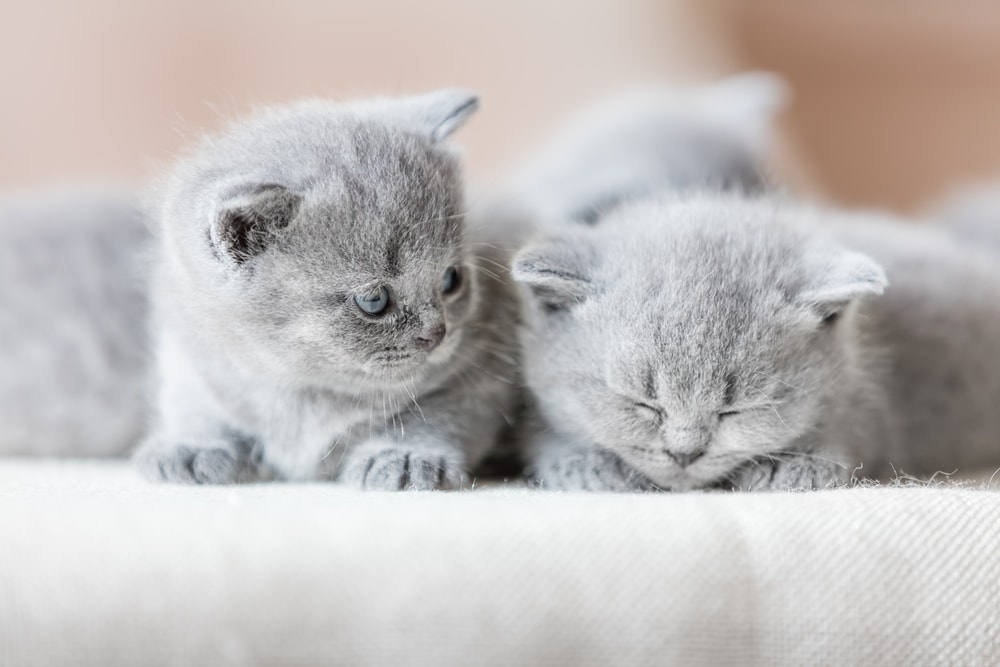
If you’re looking for a relatively calm cat that fits into a family lifestyle, the British Shorthair is an outstanding choice. They’re relatively healthy, live a long life, and are easy to litter train!
However, keep in mind that British Shorthairs don’t always want you to hold them, so if you’re looking for a lap pet, these cats aren’t the way to go. Instead, a British Shorthair is excellent for those who want a family pet whom they can give affection and love but don’t need to devote attention to them every minute. They’re an excellent choice for families, and they’re great around children and other pets too.
British Shorthair Characteristics
3 Little-Known Facts About the British Shorthair Cat
While the British Shorthair might be a relatively common and popular breed, that doesn’t mean they aren’t full of surprises! We highlighted three of the most surprising facts about the British Shorthair for you here:
1. Some British Shorthair Cats Have Gold Eyes
While you can find British Shorthairs with many different colored eyes, perhaps the most striking are those with gold eyes. It’s not a dull gold either; instead, it’s a gold that nearly glows in the dark!
2. British Shorthairs Are Considered the First Cat of the “Cat Fancy”
You might think that cat breeding has been a common occurrence throughout all of history, but that’s simply not the case. Harrison Wier was one of the first professional breeders, and one of his staples was the British Shorthair.
3. The British Shorthair Cat Doesn’t Mind Being Left Alone But Is Still Incredibly Loyal
Just because you don’t need to give your British Shorthair a ton of attention all the time doesn’t mean they aren’t a loyal companion. These cats bond with everyone in the family, even if they don’t want family members holding them all the time.
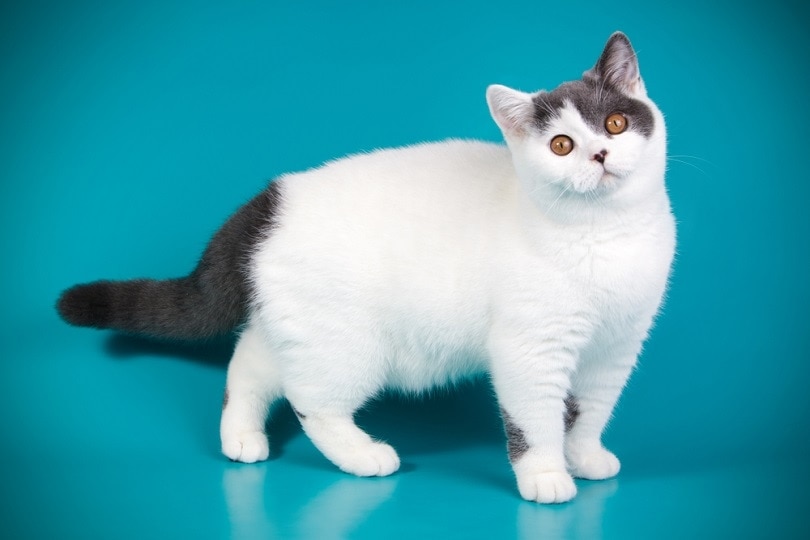
 Temperament & Intelligence of the British Shorthair
British Shorthairs are intelligent, easy-going cats that are great for families and people with multiple pets. They don’t have a moody side, although they can come off as independent and aloof.
The British Shorthair is an easy-going cat breed that makes them great for first-time pet owners or those who already have a few pets in the home. They will bond with their owners and like to play. You won’t be getting a boring cat, but you’ll need to play with them only when they want to play, not when you want them to.
Are These Cats Good for Families? 👪
British Shorthairs are great for families! They will bond with everyone, not just the older adults, which makes them excellent for those who want a pet that all family members will love.
However, smaller children need to be careful because they can fall on a British Shorthair and hurt them. Not only that, but the cat may scratch as they try to get free.
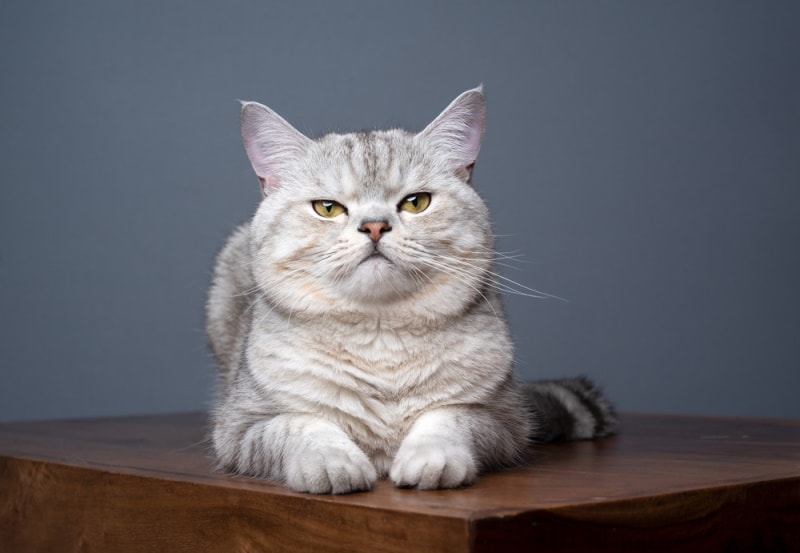
Does This Breed Get Along With Other Pets?
They are great with kids and excel with other pets. A British Shorthair is an outstanding choice whether you have other dogs or cats in the home.
While you have to worry about some other cats playing with larger dogs and potentially getting hurt, a British Shorthair has a more laidback demeanor that lends to them staying out of the way of larger pets. Still, they don’t just hang out in the corner all day, so they’ll make a great addition to a family full of pets.
- Also Read: Kid-Friendly Cat Breeds (With Pictures)

Things to Know When Owning a British Shorthair
Before you head out to adopt or purchase a new pet for your home, it’s best to know exactly what you’re getting into. That’s why we took the time to break down everything that you need to know about British Shorthair Cats here:
Food & Diet Requirements 🐡
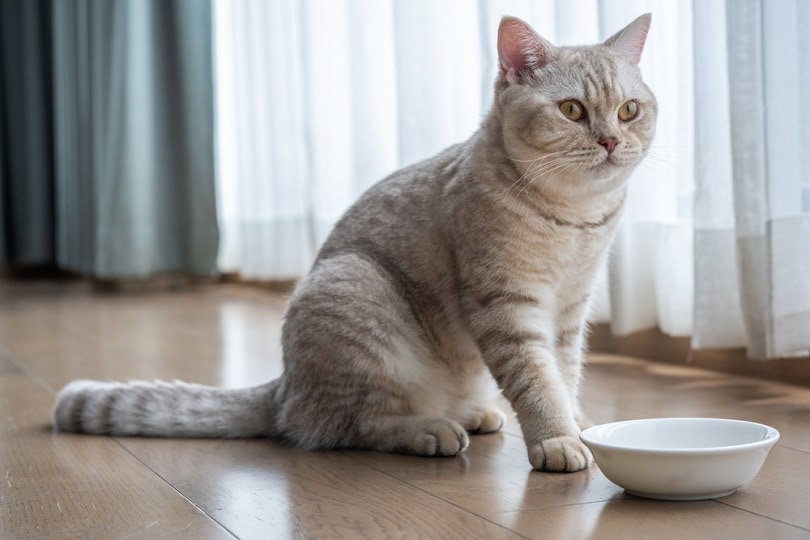
A British Shorthair will eat about ½ cup of high-quality dry cat food per day. When you break it down, this can cost you as little as $10 per month, so there’s no reason to skimp on the quality of the food.
From there, you can add in a can of wet food a few times a week and a few treats, but keep in mind that your cat won’t need as much dry food on the days that you give them wet food.
Exercise 🐈
Since British Shorthairs are a relatively low-energy breed, it’s crucial that you get creative on getting them moving and keeping them healthy.
From interactive toys to something as simple as a laser pointer that they can chase around, developing this routine early will keep your British Shorthair at a healthy weight, lowering future vet bills and extending the life of your cat.
Training 🧶
If you’re thinking that you’re going to teach your cat a ton of new tricks, a British Shorthair isn’t what you want. But if you’re looking for a cat that you can quickly train to use a litter box and scratch in the right areas, a British Shorthair is precisely what you’ve been looking for.
So, while you might not have a cat that can do the coolest tricks, you will have one of the best-behaved cats around!
Grooming ✂️
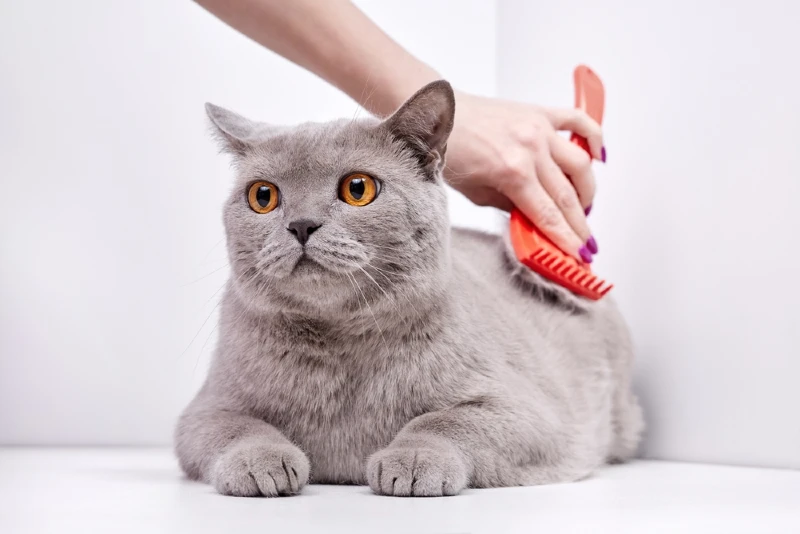
While British Shorthairs don’t need as much grooming attention as their long-haired counterparts, they still require a moderate amount. You should brush them at least every few days to keep their fur from matting.
You also need to brush their teeth a few times a week to keep their oral hygiene in check! You need to stay on top of this as soon as you get them, so they get used to everything early on.
Health and Conditions 🏥
While British Shorthair Cats are a relatively healthy breed, you need to keep an eye out for a few specific concerns. Amyloidosis is a major concern, but there are no known non-invasive tests. Progressive retinal atrophy is on the other end of things, where there are tests available but no treatments.
Overall, it’s always best to consult a veterinarian as soon as you adopt a new kitten. Also, keep up with preventative measures, like proper diet, exercise, and oral hygiene. While these won’t prevent all problems, they make it far less likely that you’ll have to deal with the most common health concerns.
- Obesity
- Dental problems
- Amyloidosis
- Progressive retinal atrophy
- Hypertrophic cardiomyopathy
Male vs. Female
While male British Shorthairs tend to be a bit larger and need more affection than females, that’s about where the differences end. Keep in mind that it’s generally more expensive to spay a cat than neuter them, and it’s also a bit more important.
Spaying cats can prevent a litany of health problems, like feline cancer, later in their life. So, if you don’t plan on breeding your female British Shorthair, get them spayed as soon as possible.
Final Thoughts
After reading about British Shorthair Cats, you likely want to head out and find one to adopt. But before you do, be sure that you can afford both the upfront costs and the monthly costs that come with adding a new member to your family.
Take your time when finding a breeder, and always ask for references and a written guarantee of health. Otherwise, you’re risking getting a cat with a ton of health problems or dealing with a breeder who treats their pets inhumanely.
See Also:
- Tabby British Shorthair Cat: Facts, Origin & History (With Pictures)
- Ragdoll British Shorthair Mix Info: Pictures, Temperament & Traits
Featured Image Credit: PHOTOCREO Michal Bednarek, Shutterstock